
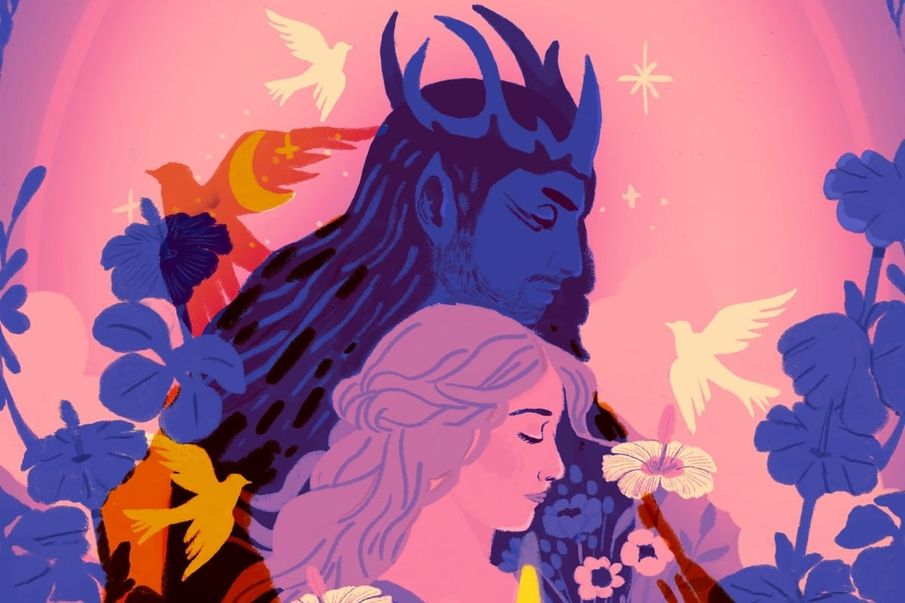
From confronting conflicts to navigating insecurities and life changes, adult life can feel like a lot. But what if we could rethink, or reimagine, the everyday by exploring myths and folklore to uncover answers to our biggest questions?
Entertaining as myths and legends are, I’ve always been fascinated by old stories and how they serve a purpose beyond escapism. These stories are infused into so much of our modern world, found everywhere from films to literature, and everyday language – who hasn’t used the expression ‘my Achilles heel’ from the eponymous myth to describe a weak spot, or ‘caught between a rock and a hard place’ to refer to a no-win dilemma from Homer’s Odyssey? They can connect us to something much deeper – a sense of hope, morality, creative power – and even help us make sense of the world around us.
So, what is mythotherapy, exactly?
“Mythotherapy invites clients to view their experiences as part of a larger story of being human,” counsellor and parenting expert Jenny Warwick explains.
Essentially, it involves integrating myths and folklore into therapy to help us explore our personal issues, and navigate life’s challenging transitions – all within the wider context of archetypes and symbolism. The recognisable archetypal figures and time-honoured themes provide a lasting framework for this kind of self-discovery, as well as inspiring us toward a collective wisdom.
“By exploring universal themes – such as loss, renewal, struggle and conflict – clients can begin to recognise their own stories as part of timeless patterns, rather than as isolated or shameful events,” Jenny continues.
Thinking outside the (Pandora’s) box
As someone who enjoys exploring archetypes, particularly within the stages of a woman’s life, I use them to make sense of the world. Sometimes, there are things in life that simply feel too big to put into words.
“Myths [...] help access the unconscious, showing images that make sense of, and contain, overwhelming emotions,” Jenny reflects. So, when we witness our fears and desires mirrored through a call to action, or quest within a character’s journey, we feel recognised and heard in a way that transcends the usual limits of everyday living.
We come to know ourselves beyond social conventions, while making sense of them, feeling connected to something bigger – both in relation to a larger truth and, more specifically, our past, ancestors, and cultural wisdom or identity.
Myths, legends, and folklore that embody values from a particular society or region have been told and retold for as long as language has, being passed down from generation to generation as a way to convey lessons, and foster a feeling of belonging when facing the unknown.
For me, Lisa Marchiano, author and Jungian analyst, sums up the notion of myths as guiding stories in her book, Motherhood: Facing and Finding Yourself, beautifully: “Others have been there before us. Maybe we can see our plight a little differently, or maybe we can imagine more options for ourselves. And we have some sense of where we are going, because we know what story we are in.”
The inside story
We all have a favourite myth or folk story that we relate to on a deeper level. Mine is the tale of Ceridwen and her cauldron of transformation – perhaps because of her connection to fate and regeneration.
What’s yours, I wonder? Is it the folktale of Anansi, the spider god and trickster, demonstrating survival through cleverness; the legend of Robin Hood as a symbol of justice for the people; or the myth of Persephone and Demeter? This Greek myth portrays how Hades abducted Persephone to the underworld, causing her mother Demeter’s grief to bring winter to the Earth – and the season of spring upon her daughter’s return. With this example, Jenny highlights the “themes of loss and renewal, reminding us that challenges can bring transformation and, eventually, return”.
There are various frameworks for classifying myths, but this story, and many others like it, reflect the stages of the human experience – including grief, separation, and family bonds. Showing an overlap of etiological, psychological, and metaphysical purposes, these stories can help us to understand the cycles of the seasons, life and death, as well as loss and gain.
One of my favourite folktales to tell is the story of Ceridwen, who is known in Welsh mythology as a goddess of wisdom and transformation. It goes like this:
Ceridwen, watched by her white cats, concocted a potion in her legendary cauldron for her son Morfran (or Avagddu), who was cursed to be ‘monstrous’, to transform him into a remarkable leader. After one year and one day, her special brew was finally prepared. However, her servant, Gwion Bach, who was guarding the potion with a large spoon, accidentally spilt some and instinctively tasted it, gaining the magical knowledge within.
Incensed, Ceridwen pursued Gwion relentlessly, shapeshifting into various forms, including a greyhound and an otter. Gwion’s fate was sealed when he transformed into a single grain of wheat, believing he could outsmart her. However, she transformed into a hen and ate the seed, which took root in her body, causing her to become pregnant. He was later reborn, becoming a great poet of his time.
The myth of Ceridwen can present a parallel to the experience of change. Through this shapeshifting pursuit, we understand the natural impermanence of life and the seasons, as well as the psychological themes of death and rebirth. This goddess brings transition (whether we like it or not!), encouraging us to release the past, accept what we cannot control, and open ourselves to greater potential.
(Please note: There are many different spellings of the name Ceridwen, as well as variations of the story itself.)
Folklore in therapy
Jenny describes some of the different archetypes within old stories, and how language and imagery, which are usually layered and non-literal, can be used to map the relationship between personal struggle and the mythic endeavour.
“Working with archetypes, such as ‘the hero’, ‘the wise one’, and ‘the trickster’, offers symbolic language that allows clients to explore their strengths and vulnerability, as well as their courage and self-doubt,” she says. “This perspective helps us recognise and understand recurring patterns, like repeated challenges, relational dynamics, or life transitions.”
These symbolic meanings, which often involve a journey of obstacles leading to transformation, and a return with renewed strength and knowledge, can offer context for this self-discovery.
“Mythic imagery can reframe difficulties as part of a journey of transformation, rather than a cycle of futile steps,” Jenny says. “This opens up space to explore what the different characters, or even monsters, might represent within the client.”
Research supports this notion, particularly in terms of helping children and young people. A paper, published in the Mental Health, Religion & Culture journal, noted that “harnessing the child’s imagination can be a powerful vehicle for a transforming experience, [...] with consequent positive benefits for emotional wellbeing”. It opens up the possibilities for mental health practitioners to use mythic narratives to support youngsters in understanding how they interpret risk, and make sense of their struggles.
And, so, what is the role of the counsellor in this exploration? “The therapist acts as a co-narrator, collaborating with the client to work out where they are in their story, and how they might reshape it,” Jenny explains.
Reframing an issue is something stories can give space to: “Storytelling gives some distance and perspective, allowing the client to find clarity and some room for self-compassion, as they reimagine challenging experiences,” she says.
“Mythotherapy works on many layers – including psychological, cultural, and personal – giving clients a sense of belonging to something universal, while still allowing space for individual experiences.”
A beginning, a middle, and an end?
Of course, there are downsides to myth-telling, too. Oversimplification, stereotypes, and telling myths without context, or even as a means to manipulate, are some of the potential challenges.
But one thing I believe is that myths, and their journeys of meaning, can give us insight into who we are, and where we stand in the world, as we pursue a greater truth of belonging – something most of us need right now. And while that, dear reader, might not be a full conclusion, it may offer some resolution – and the ability to turn the page.
Comments