

Good posture isn’t just about appearances and confidence; it’s about how you breathe, move, and carry yourself through the day. Here’s how to rediscover your alignment
I caught sight of myself in a cafe window the other day, hunched over my phone, neck bent, shoulders creeping up towards my ears. After nearly 10 hours working on screens all day (and an evening with more screens ahead of me), my posture was just about the last thing on my mind.
As I straightened up, and felt that part satisfying, part worrying, symphony of cracks stretching down my spine, it hit me how easily ‘bad posture’ can sneak into our day-to-day lives – and I began to wonder how good it could feel to shake it off.
Why does our posture slip?
As with many things in life, we don’t mean to let it slip. Small, everyday habits can lead to bad posture; from using our phones slouched over on the sofa to working from our kitchen tables, finishing off ‘just one more email’, we don’t mean to hunch over, or spend too long sitting in one place.
Over time, little things can become habits. And those little habits? They can have a lasting impact on our bodies in ways we might not realise. “Poor posture does more than cause muscle aches or stiffness. It can also affect your breathing, mood, and energy levels,” Urvisha Lunagariya, an advanced physiotherapist, explains, detailing the long-reaching effects of poor posture.
“When we slouch, our chest cavity becomes compressed, which limits oxygen intake, and often leads to shallow breathing. Over time, this can make you feel tired, anxious, or even emotionally low. Physically, bad posture can cause neck, back, and shoulder pain, tension headaches, and even numbness or tingling if nerves become compressed.”
The benefits of good posture
Good posture is even better for us – physically, mentally, and emotionally – than we might realise. It can help to reduce pain, improve breathing, and enhance digestion, all while boosting our energy levels, and helping us sleep better. Studies have even found that good posture can also help us to feel more relaxed and less anxious, with one, published in Health Psychologies in 2015, noting that ‘upright participants’ reported improved self-esteem, positive mood, and reduced negative mood when compared to those with ‘slumped posture’.
But, knowing why good posture matters and actually feeling the benefits yourself can be different matters entirely. That’s where the simple idea of posture walking comes in.
Posture walking
It might sound like ‘just another wellness trend’ to add to the list, but posture walking (a type of mindful walking) can be a simple way to reduce strain on our joints and muscles, alleviate back and neck pain, and reinforce good posture habits.
Essentially, posture walking involves walking with a deliberate, upright alignment. Keep your head, shoulders, and hips in a straight line, relax your shoulders, engage your core, and look straight ahead while swinging your arms freely.
“When it comes to walking, posture makes a big difference in how efficiently your body moves. Many people don’t even realise that they lean forward, round their shoulders, or tense up their neck without even noticing,” Urvisha explains.
“As a physiotherapist, I often tell my patients to think ‘tall but relaxed’. Imagine a string gently lifting the top of your head upward. Keep your shoulders back and loose, your chin slightly tucked (not pushed forward), and let your arms move naturally at your sides. Your steps should feel light and even. If your footsteps sound heavy, it might mean your core or hips are not engaging properly.”
Being more mindful of how we walk can help us to be more aware of other areas where our posture may be, unbeknownst to us, causing us more discomfort. So, what small things can we start to change to help increase our awareness of our bad habits, and start improving our posture?
Improving your posture, one day at a time
You don’t have to overhaul your whole life to start seeing the benefits of better posture. It’s like building any other new daily habit; little reminders, small changes, and a bit of patience (and self-compassion) can go a long way.
According to Urvisha: “Posture is not just about standing straight. It is a habit that affects almost everything you do.” And because little changes add up, Urvisha recommends the following simple, yet effective, tips to start improving your posture:
When sitting at your desk: keep your feet flat on the floor, support your lower back, and relax your shoulders.
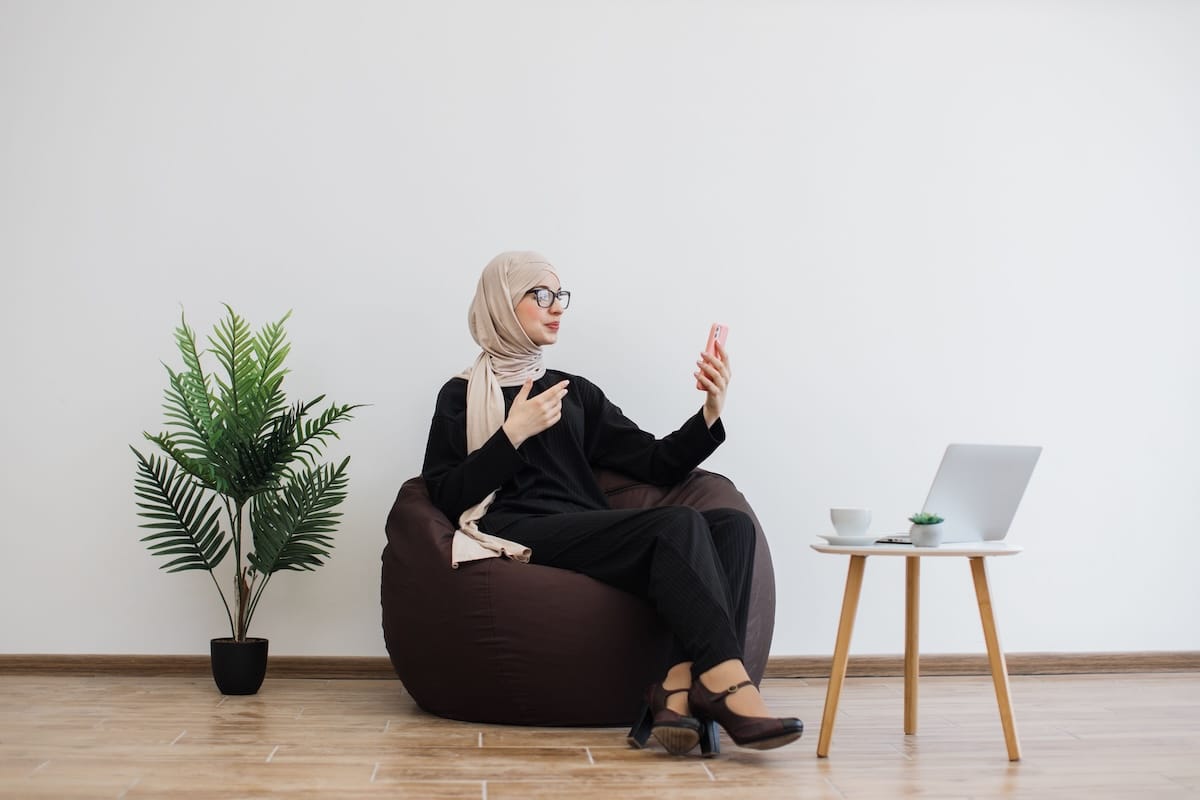
When using your phone: bring the screen up to eye level, instead of bending your neck down.
When driving: adjust your seat so your back is fully supported, and you are not leaning toward the steering wheel.
When standing in line or brushing your teeth: gently engage your core and lengthen your spine, rather than locking your knees or slouching.
Good posture can be learned
As I write this, I have to remind myself not to sit curled up like a shrimp, hunched over my keyboard, occasionally craning my neck to look at a second, too-high screen, showing a growing backlog of emails. I can’t help but wonder: are some people born with naturally good posture? Or is it one of those skills we’re supposed to learn along the way that I completely missed?
“Some people naturally have good alignment, because they have strong muscles and good body awareness. However, for most of us, especially with how much time we spend looking at screens, good posture is something we need to relearn and practice,” Urvisha reassures me. “Our muscles adapt to the positions we stay in most of the time. If we sit slouched or lean forward daily, that becomes our ‘normal’. The positive side is that posture can always be improved with consistent awareness, strengthening, and stretching.
“I often tell my patients, ‘Your posture reflects your habits, not your genetics.’ With mindful movement, core and back strengthening, and regular posture check-ins throughout the day, you can train your body to find its natural alignment again.”
It’s reassuring to know I can improve my posture with a few consistent habit changes. I know I’ll probably still spend too long at my laptop, and end most days scrunched into a ball, but at least now I’ll start to notice it. And on days when I do catch sight of myself reflected back in a cafe window, I can remember to stand tall, unclench my shoulders, and bring my phone up to eye level.
Good posture isn’t about perfection; it’s about awareness. Even if I forget a dozen times a day (which I will), each small stretch and mindful moment is a little act of self-care in motion
Comments