
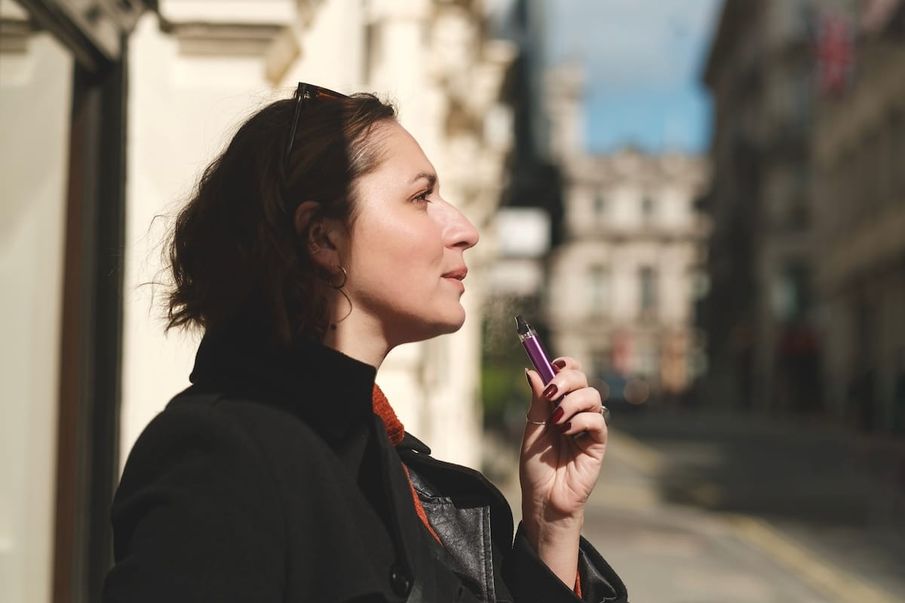
A look into the underlying cause of our urge to vape, and how we can support ourselves in quitting successfully
The difficulty with any coping mechanism, such as vaping, is that it becomes an ingrained behaviour – a habit we turn to and repeat, whether it’s effective or not. Even though most vapes contain nicotine, some people use them as a transition from smoking cigarettes, while others seek relief from stress and anxiety. And for those who want to quit, it can be perceived as a test of willpower.
But in reality, this isn’t the case. Vaping is a pattern of behaviour created by the brain’s stress response, and once that pattern forms, it can run automatically. The good news is that, with a solution-focused approach, it can be changed completely.
There’s been a sharp rise in the number of people vaping in the UK over the past few years, with around 13.5% of adults reportedly vaping in 2024, compared to 8.9% in 2022, according to a study in the journal Addiction. It also noted that in the 16 to 24 age group, the prevalence increased from 17% to 26.5%. However the research (from UCL and funded by Cancer Research UK) noted that, since the announcement of government plans to restrict vaping in January 2024, until January 2025, the proportion of people vaping remained constant, rather than growing (as was seen previously).
The study also revealed that there has been a substantial decline in the use of disposable e-cigarettes at least – with 16 to 24-year-olds dropping from 63% to 35%. This highlights that more people seem keen to kick the habit.
Why do you feel the need to vape?
Much like cigarettes, vapes contains nicotine, which is highly addictive. It prompts the release of dopamine (the ‘feel-good’ hormone), which reinforces the behaviour. However, it’s a temporary response, and withdrawal can bring further anxiety, irritability, and stress.
People often say to me: “But I’m not stressed – why do I keep reaching for my vape?” But you don’t need to feel stressed for the primitive brain – responsible for our fight-or-flight response – to behave as if you are. This part of the brain is instinctive, basic, and focused on survival. It doesn’t understand logic or long-term thinking; it simply notices that vaping gives momentary relief, and treats it as something ‘useful’.
While modern life isn’t full of packs of lions stalking us and life-or-death threats on a daily basis, the brain reacts to everyday pressures – work stress, worry, guilt, overthinking – in exactly the same way. It can’t differentiate between the real and the perceived threat.
These pressures and worries can build up over time; it can be helpful to visualise this in terms of the ‘stress bucket’. Every unprocessed negative thought goes into the bucket, and when too many build up inside it, it can overflow. When it does, the primitive brain takes over, and drives habits such as vaping.
One of the key contributing factors as to whether your stress bucket can start to empty, or keeps filling up, is whether you get enough rapid eye movement (REM) sleep – known as the dreaming stage. It’s during REM sleep that the brain processes the emotional experiences of the day. If you struggle to fall asleep, wake frequently during the night, wake up tired in the morning, or don’t remember dreaming, it’s often a sign that your brain isn’t completing this process properly. When that happens, the stress bucket stays full.
When this happens, three key areas of the brain start functioning differently:
-
The amygdala, which detects threats, becomes more reactive.
-
The hippocampus, which stores habits, repeats learned behaviours automatically.
-
The hypothalamus, which controls stress hormones, keeps the body on high alert.
This combination pushes you to seek quick dopamine fixes – such as vaping. The primitive brain thinks that it’s helping you cope. It’s wrong, of course, but the brain doesn’t understand that. Understandably, it just wants immediate relief from discomfort.
How to quit vaping
Breaking the cycle of turning to unhelpful coping mechanisms, like vaping, isn’t simply about being stricter with yourself. It’s about calming the primitive brain so it no longer feels the need to send you towards the vape in the first place.
A tool that supports clients with this is solution-focused hypnotherapy, which helps by guiding the brain into a trance state, similar to REM sleep, allowing it to process old thoughts, reduce anxiety, and update unhelpful patterns.
Alongside this, the brain needs healthy levels of serotonin – the neurotransmitter that supports with regulating mood, sleep, and digestion. We produce serotonin when we focus on positive thinking, interactions, and keeping ourselves active – getting enough sunlight, increasing tryptophan-rich foods in our diet, and exploring meditation can be simple ways of doing this. These behaviours support long-term wellbeing, and shift the brain away from survival mode. Essentially, we start to empty the stress bucket, and allow serotonin levels to rise, which settles the primitive brain.
At this point, cravings should reduce naturally, and the urge to vape fades without such a fight – or the need to rely solely on willpower. You’re not forcing yourself to quit – the brain simply stops asking for it. That’s how real, lasting change happens.
Comments