
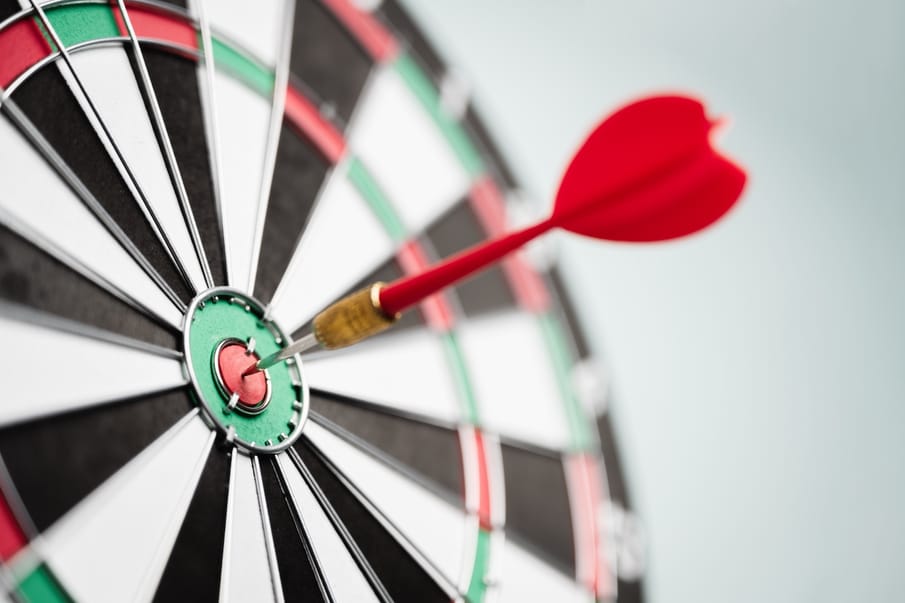
More than a hobby that requires eyes on the prize, darts is right on target when it comes to offering mental health benefits for players of all abilities
Whether the sport conjures up memories of throwing a few arrows at a well-worn board in your garage growing up, or recollections of casual catch-ups with friends at a social club, the humble dartboard might not be the first thing that springs to mind when you consider ways to nurture your mental health – but the sport is emerging as a surprisingly supportive (and accessible) wellbeing tool.
Once dismissed as a pub pastime, darts has experienced a surge in popularity in recent years, with the colder months bringing packed arenas, televised tournaments, and a growing community of players discovering its therapeutic benefits.
Hypnotherapist Chris O’Connor has witnessed this transformation first-hand, and has worked with top-level players, including Nathan Aspinall and Stephen Bunting. “Darts is a fantastic sport that welcomes people from all backgrounds,” says Chris. “It really doesn’t matter whether someone is an elite-level professional, a young person in an academy, a child at school, a keen amateur in a pub league, or an individual living with a physical or mental disability, everyone can take part and enjoy the game.”
According to Chris, it’s more than its accessibility that makes darts worth a shot. “It encourages people to think more optimistically, interact socially, and stay both physically and mentally active,” he explains.
Eyes on the prize
A game of darts engages both the mind and body: there’s the intense concentration and mathematical calculation as you plan your throw; and the precise physical coordination required to execute the delicate hand-eye movements needed to hit a target. It might sound stressful, but it can be a helpful distraction from what’s worrying you.
“Focusing on the board provides a mental break from everyday stress, while the challenge of improving performance keeps the brain active and positively engaged,” says Chris.
Multiple studies confirm that darts can lead to improved mental health outcomes. For example, in 2024, researchers conducted an experiment among 40 pre-adolescents to investigate whether a 12-week darts training programme would affect visual perception and attention levels – two aspects of cognitive functioning that can boost academic and sporting performance. The results, published in Healthcare, revealed that regular dart exercise had a “significant” impact on both. Researchers noted that this study mirrored similar findings among various other age groups, including women aged 21–26, and university age young adults.
For older people, the effects are even more interesting. A 2020 systematic review, focused on adults aged 50 and over, found that taking part in sport was meaningful for older adults because it helped them resist the stereotypical idea of “being old”. The article, which was published in the journal Ageing & Society, described how continued involvement in competitive sport helped them “delay and control the ageing process”.
And with darts being on the lower end of the scale in terms of physical exertion, with the option to play solo and from virtually anywhere with a dartboard, it can be an ideal sporting option for those in their golden years.
Physical or mental health issues can mean that many older people face isolation, yet a regular darts game can be a vital opportunity to connect with friends. “Playing darts in a supportive and welcoming environment can make a difference to people who find social situations difficult,” says Chris. “It’s a natural way to meet others, and to build confidence gradually through a shared and enjoyable activity.”
Getting into the flow
For professional darts players, intense levels of focus are required if they want to bring their A-game, often under the pressure of televised tournaments. “Few sports require the same combination of mental resilience and fine motor skills as darts,” says Chris, who provides tailored, solution-focused psychotherapy and hypnotherapy to help players enter an optimal ‘flow state’ in order to boost performance.
Of course, there’s no therapy required before you step up to the oche and take aim, but Chris does mention that the right mindset is key. When approached with a positive attitude, Chris claims the game offers a “safe, competitive environment that stimulates the mind, builds confidence, creates new friendships, and provides a sense of achievement”.
The observer effect
Even watching darts from the sidelines can yield wellbeing benefits. Although published back in 2009, a working paper by Birkbeck University in London found that darts’ modern origins as a ‘pub sport’, often enjoyed at an amateur level, means the majority of events still take place in social spaces. “Unlike other individual sports, the seating at many darts events is arranged around large tables,” writes author Matt Wasserberg, “where groups of fans sit and drink together, and large bar areas, where fans congregate during breaks in play, are usually provided.”
It’s this “highly social aspect” of darts that means it is appealing not just to regular fans, but to people who enjoy the event, because it “provides the opportunity to spend an evening in the company of friends”.
So, how can you get involved with playing darts?
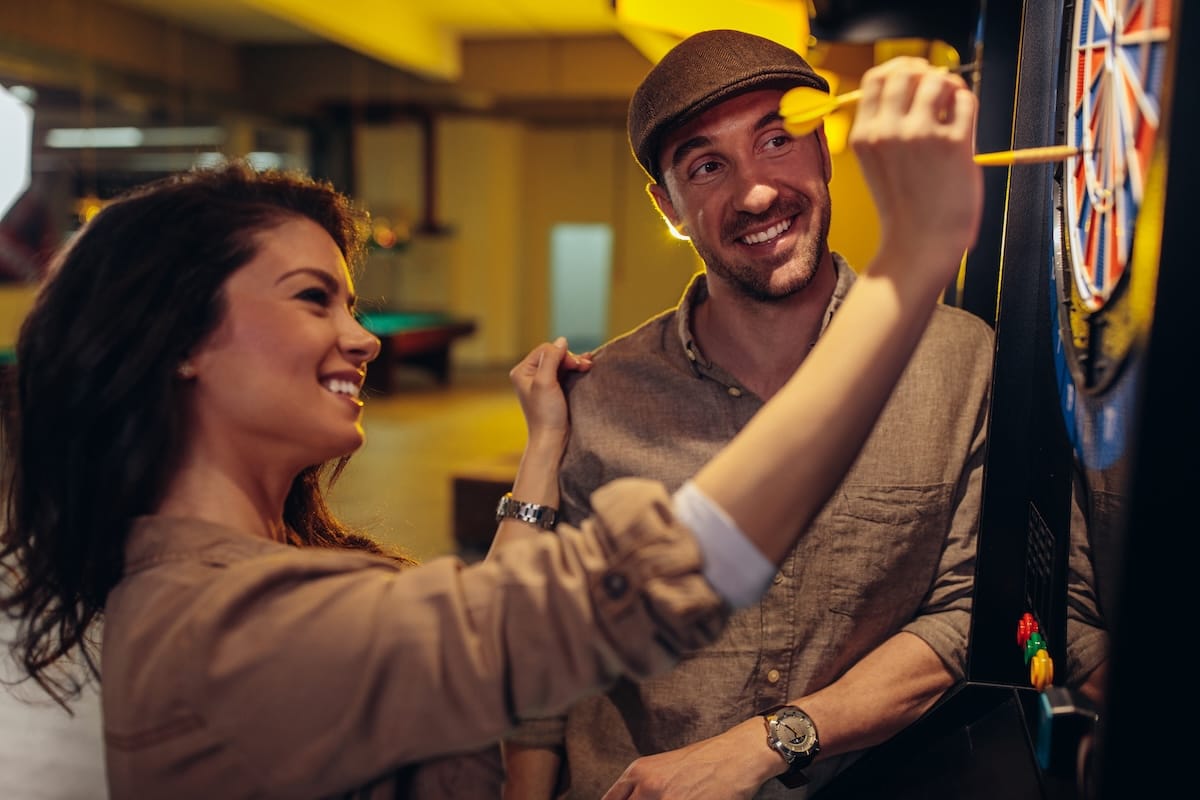
Make it lighthearted
Approaching with playfulness will get the most out of the game.
“Darts fosters connection, teamwork, and enjoyment in a safe and supportive environment,” says Chris. “Neuroscience shows that these conditions boost the production of serotonin, our natural ‘feel-good’ chemical. This lifts mood in the short-term, and helps build long-term emotional balance and resilience.”
The Village Hotel chain has multiplayer darts experiences available in locations across England and Wales, where you can play with friends, making it a fun social occasion without the need for a particular skill level. Find your local venue at village-hotels.co.uk/darts-social.
You could also rope in a friend or group to visit Flight Club Darts (locations around the UK), where you can try six different games – with the board connected to a screen to keep a tally for you, and advise on your goals for each one – which can heighten the fun with some lighthearted team play. If you are seeking a more solo hobby, you can get regular boards for your home or even some magnetic options, which can be convenient if you’re worried about damaging any walls.
Focus on your own progress
Don’t worry about the competitive aspect of darts. Chris explains that scoreboards tend to fade into the background when people are simply working on improving their technique, or socialising with friends.
“Although there is competition, most players find themselves competing more against the board than against others,” says Chris.
Make it a regular habit
Why not plan a weekly darts night? “When we spend time with others, think positively, and have fun, the brain produces a healthy flow of serotonin,” says Chris. “A regular darts night provides this effect consistently, offering routine, connection, and a reliable lift to mood.”
So, next time life feels a little off-target, grab some darts. You might just find that hitting the board helps you hit your stride.
Comments