
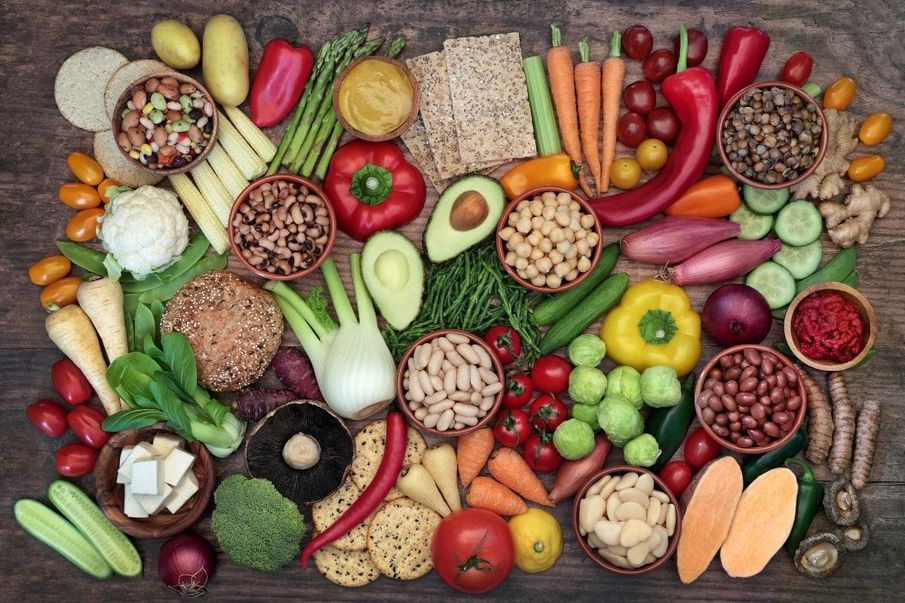
With a recent report showing that eating a diet supporting the planet could be the most mutually beneficial for both its, and our, health, here’s everything you need to know about making food choices that sow the seeds of a greener future
Barely a week goes by these days before a new diet trend pops up on social media. So, you’d be forgiven for not knowing if you should be tucking into the Mediterranean diet, giving veganism a try, or focusing on upping your protein. But the latest discussion around the planetary health diet could offer you the best of both worlds – and the stats supporting it are compelling.
A recent report, published in The Lancet in 2025, found that more than half of the world’s population struggles to access healthy diets. This doesn’t just impact our health and wellbeing, but, also, has real consequences on our environment, with around 30% of all the greenhouse gasses we produce coming from our food systems.
Enter the planetary health diet (PHD) – a recommendation that can not only improve our health, but also reduce diet-related chronic disease, and potentially slash the food-related emissions we make by an impressive 50% by 2050. And with the report being produced by 70 leading experts, from 35 countries, and building on previous research, it sounds like a win-win for both our own wellbeing, and the world. But what actually is the PHD, and how can we follow it?
What is the planetary health diet?
A PHD is (unsurprisingly) centred around a plant-rich diet, but with a more flexible approach. It recommends at least five portions of fruit and veg a day, while also making sure you tuck into a portion of legumes (i.e. beans or lentils), a portion of nuts, and plenty of wholegrains. Animal products aren’t necessarily off the menu all together, but it’s suggested that chicken, fish, and red meat play a much smaller role in your diet, with most of your protein coming from plants (which make up around half your plate).
It also suggests consuming seasonally available foods, for example strawberries in summer and root vegetables in the winter months. Because of this, it recommends flexibility for different cultures, centering around local dishes and produce – those in Greece may tuck into traditional gigantes plaki (giant beans in tomato sauce), while those in Vietnam may enjoy broth soup with Asian greens.

Why should we follow it?
According to Dr Justine Butler, who is head of research at Viva!, the UK’s leading vegan campaigning charity, the environmental benefits of the PHD could be huge, purely from its reduction of animal-produce.
“Looking specifically at environmental impacts, studies show that a diet free from animal products has been found to produce just 25% of the food-related greenhouse gas emissions of a typical meat-eater’s diet in the UK, while also reducing foods’ land use by 76%, and water use by over 50%,” she says. Dr Butler notes that eating this way can reduce the impact of production on wildlife by half, which makes the vegan diet, in general, the best one for our planet.
The benefit of the PHD is that it offers flexibility without requiring the full commitment of going meat-free, as with vegetarian or vegan approaches. Eating seasonally, and around local foods, can also support the environment, while being intentional about the food we eat can help to limit food waste.
“Globally, around one-third of all food produced for human consumption is lost or wasted, equal to roughly 1.3bn tonnes every year, and this waste has a devastating impact on the planet. Every item of food we throw away effectively ‘carries’ the land, water, and energy that went into producing it. When that food ends up in landfill, it releases methane, a gas that is 28 times more potent than CO₂,” says Anna Wood, founder of JUX Food, which uses freeze-drying technology to make everyday food last longer.
Evidence reveals that opting for the planetary health diet comes with notable health benefits, too. The EAT-Lancet Commission claims the PHD could prevent a whopping 11 million premature adult deaths every single year, thanks to limiting saturated fats (which can be linked to high cholesterol and heart disease), and sugar. And those greens make a difference; plant-based diets, in general, are linked with reducing cardiovascular disease, diabetes, chronic kidney disease, and even cancer.
How can we get started with the planetary health diet?
Divide your plate
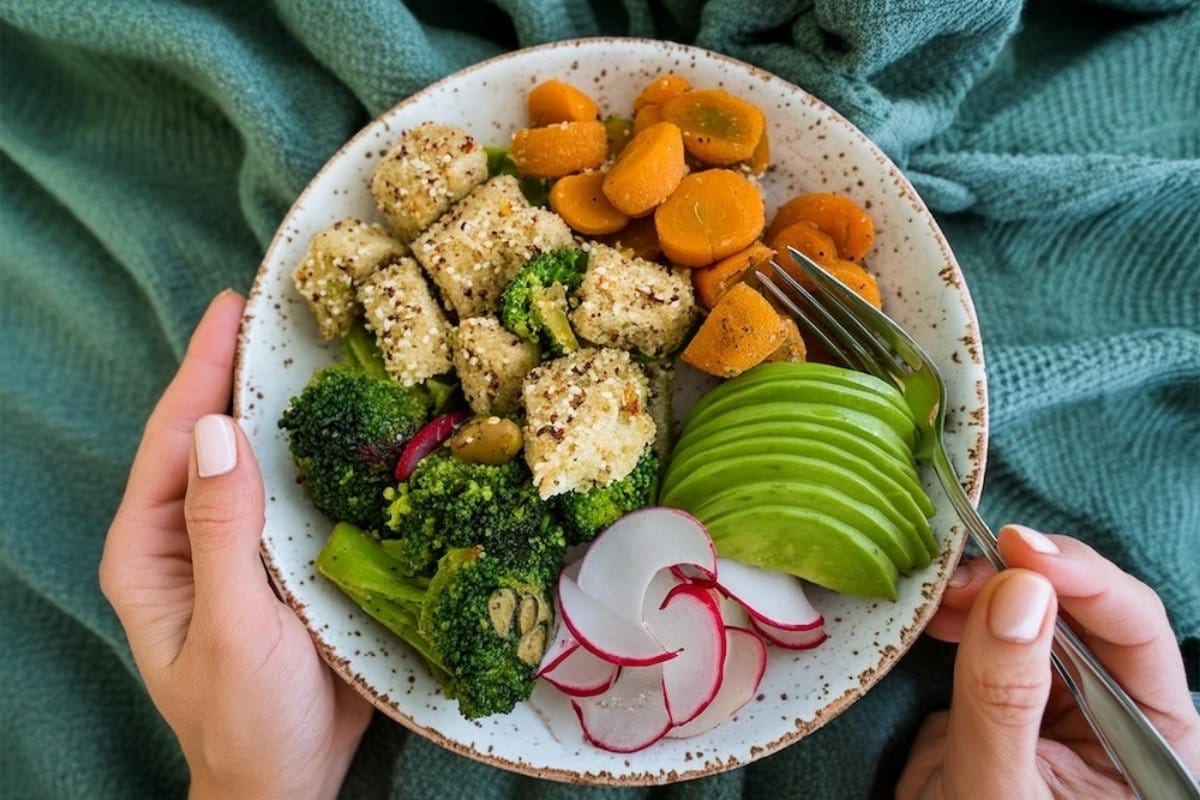
A simple way to begin is just to be more aware of how your plate is divided. As a rule, around half should be made up with a colourful mix of fruit and veg, while a third will be wholegrains. The rest is plant proteins (e.g. pulses), and moderate amounts of animal protein and dairy, if you consume animal products. Don’t get too hung up on exact amounts; even a move towards more plants on your plate is a big shift that can make an impact.
Eat a rainbow
One way to get the variety of the PHD is to focus on making half your plate a rainbow, with a mix of colourful fruit and vegetables: think green peppers, red strawberries, aubergines, and more! If your plate looks like a rainbow, you’re on the right track!
Swap daily meat dishes to weekly
The planetary diet might be centred around fruit, veg, and wholegrains, but it doesn’t have to be completely meat-free. Instead, aim to reduce meat consumption to once a week, and poultry and/or fish to twice a week, making sure to have a few days each week where you eat plant-based.
Small steps make a big difference
The PHD isn’t necessarily about a huge diet overhaul, but consistent small steps, which can make a massive impact. “By adding an extra serving of vegetables to your plate, choosing whole grains, swapping meat for plant-based proteins once or twice a week, and reducing your food waste at home, we can all take steps toward a healthier, more sustainable food system – potentially preventing millions of deaths globally,” says Corrine Toyn, a dietitian who runs chickpeamarketing.com.
The principles of the planetary health diet are grounded in sound evidence, and even following a few of its core ideas could be great for your health and your environment. So, the next time you’re meal prepping, batch cooking, or writing your shopping list, why not do it with the planetary diet in mind?
Comments