
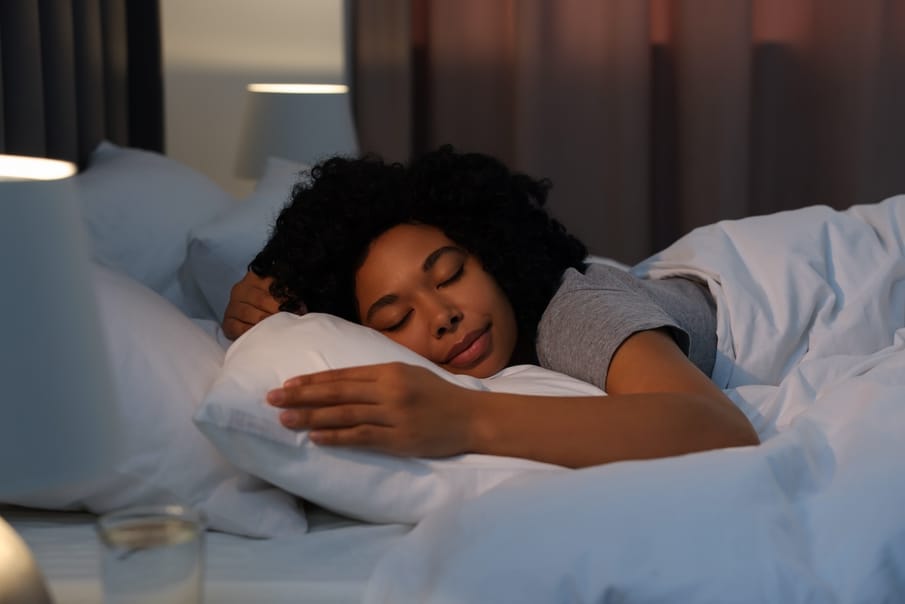
It’s the wellness trend of the hour, but can you truly hack your sleep, or is this TikTok hit just another pipe dream?
Optimising our wellbeing seems to be the idealised goal in modern life – another thing to achieve on top of juggling countless responsibilities and stresses. The thought alone can be exhausting, and, often, compounds the very problem it’s trying to address. So, with many of us struggling to drift off, it’s no wonder that ‘sleepmaxxing’ – a set of sleepy tricks to solve all your slumber woes – is a social media sensation. But, what is it exactly, and is it something we should be practising for that elusive north star of optimum sleep?
What is sleepmaxxing?
‘Sleepmaxxing’ is a term for maximising your sleep through various hacks. And, while seeking a better night’s sleep is nothing new, the concept relies on multiple angles and collated tips, focused on creating an optimised sleep schedule.
The number of tips under this hashtag can feel a bit endless, but some of the most talked-about ones start with your morning routine: getting outside to enjoy the early sun to increase melatonin levels (a hormone that regulates our sleep); avoiding daytime napping; and refraining from hitting the snooze button.
At night, tips include avoiding alcohol, caffeine, and heavy meals, eating fruits high in melatonin (such as kiwis), and even drinking a ‘sleepy girl mocktail’ (which contains cherry juice and magnesium powder). Plus, cultivating optimal bedroom conditions: going to bed at the same time every night, clean sheets, zero blue light, sleeping in a cool room, listening to white noise or a guided meditation, and even taping your mouth shut – to name a few!
Some fans of the trend even claim that specific gadgets are beneficial, such as red light machines, and wearables that utilise sensors to score sleep. However, a 2023 study, published in the journal Frontiers in Psychiatry, found that while red LED lighting panels can improve sleep quantity for patients with insomnia, red light therapy can increase alertness and negative emotions before bed.
The science of sleep, and what works
So, the jury is still out on whether red light helps with sleep, as it is for some other tips. While kiwis are both good for us and high in serotonin (our ‘happy hormone’), which the body converts into melatonin, the one study, published in Nutrients, which suggests eating kiwis before bed can help you sleep longer, featured a very small sample (15 athlete participants), making it difficult to generalise the findings. Also, while there’s a lot of information championing nasal breathing, research into mouth taping is much more limited.
However, we do know for sure that quality sleep is good for us, promoting cognitive and cardiovascular health, and that some of the sleepmaxxing tips, including the impact of daylight on sleep, do align positively with scientific findings.
For example, a 2021 study published in the Journal of Affective Disorders, involving more than 400,000 participants, found that increased daylight exposure improved mood and reduced tiredness. A recent 2025 study in BMC Public Health also found that morning sunlight, particularly, is linked to better sleep quality.
So, the key takeaway is to investigate the substance of a sleepmaxxing tip, before you automatically trust it.
Are there downsides?
The good old-fashioned basics – like cutting back on stimulants, such as coffee, sleeping in a cool, dark room, and a good bedtime routine – are brilliant, research-backed tips, but when we’re overwhelmed with countless boxes to check off before bed, we risk straying away from the instinct to listen to our bodies.
There’s even a term known as orthosomnia, which describes an unhealthy preoccupation with ideal sleep, free of night-time wakings or disturbances. However, as we sleep in cycles that last around 90 minutes, it’s natural to wake up at certain points throughout the night.
Sleepmaxxing may then propel our pursuit of getting things ‘perfect’, which, ironically, can end up causing stress and negatively impacting sleep. The term itself can even feel jarring – borrowing the suffix from the earlier term of ‘looksmaxxing’, to ‘enhance’ physical aesthetics – prioritising the appearance of being devoted to your sleep, rather than the actual payoff of being well-rested.
Finding balance with sleepmaxxing
There’s nothing wrong with investing in ourselves and looking for ways to feel rested – that’s something we all deserve. And, as discussed, many of the hacks are genuinely good for us, but it’s important to recognise that an obsession with ‘optimising’ wellbeing can create unnecessary pressure, and overcomplicate something that can be as simple as listening to ourselves.
The trick is to let go of perfection and understand that some nights are better than others. Trying some of the tips, rather than feeling pressured to do all of them, may be more than enough. Perfect, in fact.
1. Reduce the melatonin-inhibiting impact of blue light at bedtime by charging devices in a different room, or reading a book.
2. Listen to a guided visualisation on a free app that works for you.
3. Repeat a bedtime affirmation in your mind, such as ‘Sleep finds me easily,’ ‘I am relaxing into stillness,’ or ‘I am deserving of deep relaxation.’
4. Get outside by setting an alarm earlier to take a walk, or using part of your lunch break to wrap up warm and enjoy the fresh air.
5. Create a conducive sleep environment with a quiet, dark, and cool room – around 18°C is about right.
Comments