
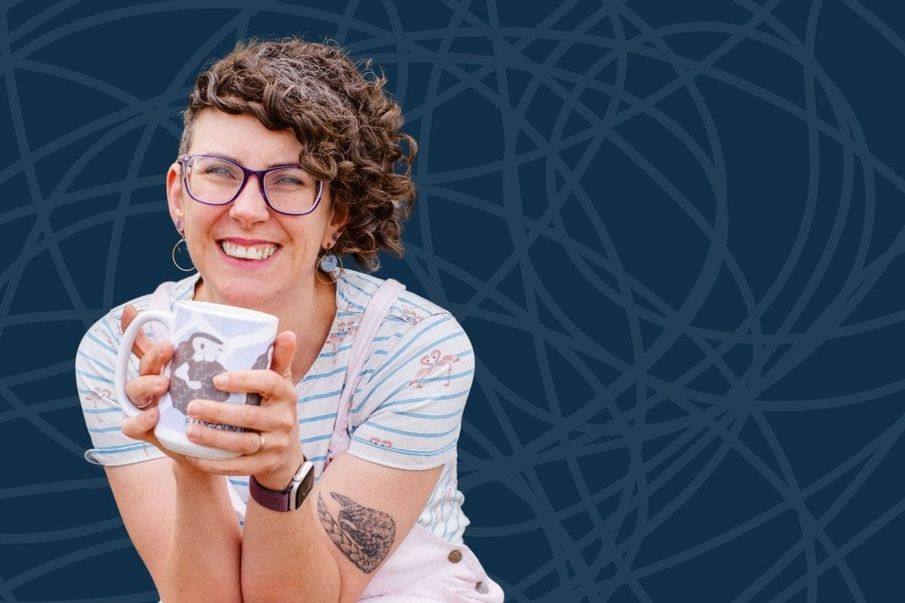
Welcome to Anxiety on Your Mind, the series where we explore the reality of living with anxiety. In this edition, Leah Hunt, 39, a freelance translator, proofreader, and copywriter from Nottingham, shares her reflections
Leah Hunt as told to Fiona Fletcher Reid
I was officially diagnosed with generalised anxiety disorder in 2018, while dealing with fertility struggles and the fallout from a miscarriage. I later experienced post-natal depression after both of my children were born.
One of the things that I find hardest to cope with is unpredictability. My mind is constantly expecting problems and trying to find ways to solve them. Like last summer, we went to a cricket match, and I had four or five different places to park lined up in my mind as I set off. There was plenty of space in the first spot, but having backups is just something that makes me feel more in control.
In that sense, I tell my friends that my anxiety is like a comfort blanket. It’s a habitual way of thinking that helps me feel more prepared for the unexpected. But the reality is that parenting two children comes with a lot of things you just can’t predict. Between the mood swings, illnesses, and school struggles – I can’t control everything, and I find it very difficult to just ‘go with the flow’ and adapt as things happen.
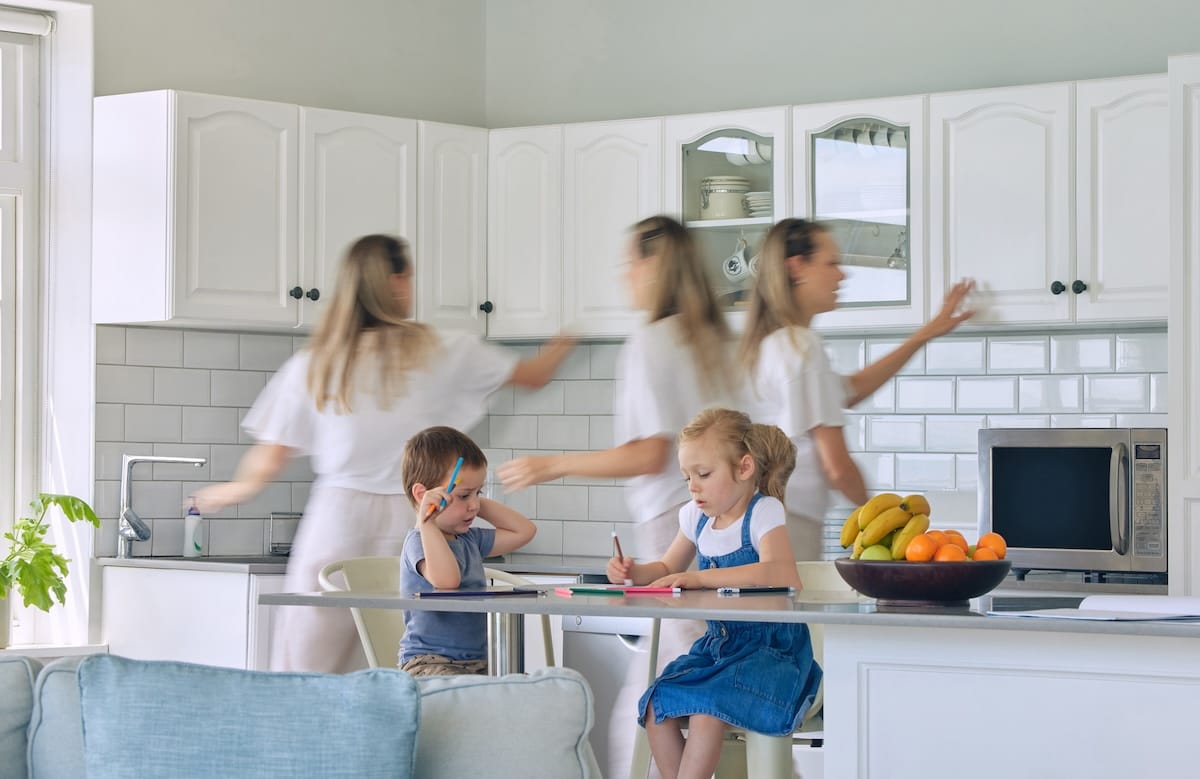
And sometimes, that anxiety feels justified. Part of the reason is that, occasionally, the worst-case scenarios aren’t imaginary. Last December, we got a call from school saying they were concerned about bruising on my son’s legs. We’d noticed it ourselves, but he’s an active, accident-prone little guy, so we’d assumed he’d just been throwing himself around the playground, as kids do. The GP took one look at him and sent us straight to A&E.
It wasn’t until then that we realised bruising like that could be a symptom of leukaemia. After several hours of waiting, Googling, crying, and messaging friends, he was eventually diagnosed with immune thrombocytopenia (ITP), a condition that causes the body to destroy its own platelets. He’s now mostly recovered, but experiences like that linger in your mind. It’s hard not to expect disaster when you’ve had to sit in the very real possibility of it happening to you.
Anxiety is something that seems to run in my side of the family. I’ve been this way since I was a child – catastrophising every little thing. I don’t know any other way to be. I do it, my mum does it, and now my daughter does it, too. Sometimes I worry if I’m responsible for passing on my anxious genes to my daughter, so I try to keep things under wraps around her as much as possible. But I’ve also heard that being open about anxiety with kids is better, because it lets them know it’s OK to feel this way. There’s always this niggling worry in the back of my mind that I’m not actually doing ‘enough’.
That carries over to my work, too. And because I am freelance, some days I’m waiting for work that comes in late, knowing that as time ticks on, I’ll be relegated to working once the children are asleep. With that said, I really do value the flexibility of self-employment, and am always able to shift my schedule around to accommodate their sick days or during the summer break.
Looking back, the most anxious day of the week was also the one that challenged that way of thinking the most. Driving the children home from my parents’ house, almost everything that could go wrong did. There was a tyre pressure warning, a motorway closure, a traffic-jam diversion, and then a faulty charging point that refused to charge or unlock my car. At one point I was trying to talk to a call centre adviser while simultaneously dealing with a child who urgently needed to use the toilet.
It felt chaotic in the moment, but we got home safely. In fact, despite spending much of my life worrying about how I’ll cope if things go wrong, the reality is that I usually do cope when they actually happen!
That’s probably why my biggest win this week wasn’t avoiding anxiety. It was hearing my mum tell me that when my son had a nosebleed, I’d stayed calm and helped him without panicking.
Anxiety often tells me that I need to prepare for every possible outcome because otherwise I won’t be able to cope. But when I look back at the things I’ve actually dealt with over the years, the evidence suggests I do always survive.
The worry is still there, and perhaps it always will be. But I’m learning that I’m far more capable than my anxiety gives me credit for.
Comments