
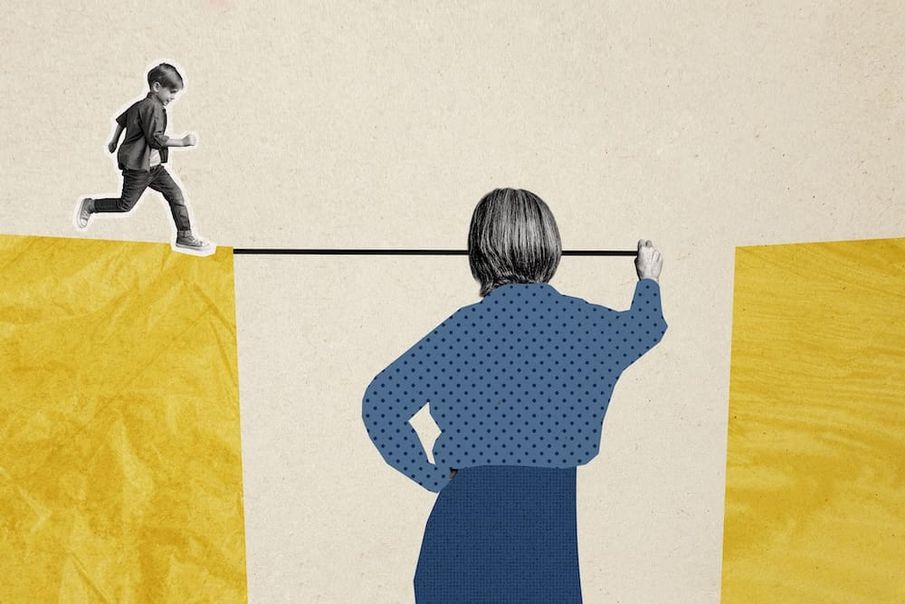
Making our parents proud is an ideal that many of us pursued growing up – and perhaps still do, to some extent, as adults. But what if a child and their achievements are always ‘on show’, existing only to satisfy the needs of their parents? Here, we delve into the impact of ‘peacock parenting’, and explore strategies to step out of the shadow
Symbolic of beauty, pride, and wealth in some cultures – likely thanks to the males’ iridescent tail feathers and dramatic courtship displays – peacocks are often associated with being confident and attention-grabbing. So, perhaps it’s no surprise that these striking creatures can be used in a metaphor to illustrate complex family dynamics.
Being honest about the ups and downs of family life isn’t something you’ll usually hear from a ‘peacock parent’. Instead, they’ll project the ‘perfect family’, parading their child’s talents in public, while criticising them behind closed doors when disappointed. For the child on the receiving end of this treatment, it can feel like their value is only as part of a show put on for everyone else’s entertainment.
What is peacock parenting?
You may have heard the expression ‘as proud as a peacock’, to suggest self-importance or attention-grabbing behaviour. In relation to parenting, this can be interpreted as narcissistic parenting, characterised by impaired empathy, manipulation, emotional dependency, and a pervasive preoccupation with feeling powerful or special within the family dynamics.
The phrase gathered momentum when a British psychotherapist and author, Kathleen Saxton, released the book My Parent the Peacock: Discovery and Recovery from Narcissistic Parenting, exploring the effects of narcissistic parenting, as well as the two childhood roles of the ‘scapegoated child’ (in which the child is a target for the parent’s insecurities), and the ‘golden child’ (in which the child is a prize to bolster the parent’s exaggerated sense of self-importance).
Behind the parade
The roots of this grandiose behaviour stem from the narcissistic wound of low or fragile self-worth, counsellor Olena Chechel notes, explaining how this leads to children being seen as self-extensions or objects to fulfil the success of the peacock parent.
“The child must be perceived as acceptable, shiny, or significant, as this all ties back to them. The message is simple: ‘You have to be what I tell you to be, because I know best,’” Olena says. “This is deeply harmful for the child, as they are not able to develop their own identity.”
Olena goes on to explain that due to these parental expectations, the child may struggle to learn about their own interests, explore their curiosities, or simply be a child. They can soon realise that having an authentic self is detrimental to the relationship, and, indeed, that their caregiver can quickly withdraw their love.
“The message that children take in is: ‘I am not worthy.’ They start to believe that who they are at the core is not lovable or worthy. Unconditional love is an aspect of healthy development in children; it allows us to develop healthy self-esteem, because we know that even with our downfalls and mistakes, we are still worthy of love,” she adds.
Three signs of a narcissistic parent
We can all show minor signs of narcissism occasionally, needing to feel special or dream that bit bigger at times. However, this goes far beyond giving ourselves a secret pat on the back when our child does well at something.
The peacock parent appears to have a permanent tendency to be possessive of their child, potentially viewing the child’s independence as a threat. Given that, what are some indicators that a peacock parent raised you (or someone you know), and what is the impact in adult life?
Manipulation
Often, peacock parents use tools of manipulation, such as capitalising on their child’s capability for guilt, especially when they assert their needs, set boundaries, or display feelings of being upset.
“The parent will say something like, ‘You are so sensitive, I can’t tell you anything.’ They will turn the tables on the child, and make them feel like they are in the wrong, simply because accepting responsibility for hurting their child could shatter their own self-illusion,” says Olena.
This pattern of emotional manipulation, including blaming and coercive behaviour, can continue into adulthood, where the child feels duty-bound to have contact with their peacock parent due to a sense of guilt, rather than a feeling of free choice or independence.
Emotional inconsistency
Peacock parents tend to blow hot and cold, depending on whether their child measures up to expectations or not. The child can feel like they’re walking on eggshells, checking the temperature of their carer’s mood in a bid to be loved.
This instability can result in people-pleasing and a lack of boundaries in adulthood, where individuals learn that to be in a romantic relationship, they must always prioritise making their partner happy. “They stop trying to understand their own needs and emotions, as that was dangerous for them growing up,” Olena notes.
To explore romantic experiences in adult children of narcissistic parents, researchers collected 77 online personal narratives from individuals who believe narcissistic parents raised them. The 2023 qualitative study, published in the journal Social Sciences, informally revealed that participants experienced difficulties in managing boundaries, as well as a fear of abandonment, and a lack of effective conflict resolution strategies in relationships.
Role reversal
Narcissistic parents may neglect caring duties, exhibiting low tolerance levels, and unresponsiveness, or, in some cases, expecting their child to be the primary caretaker through emotional or physical dependency. Poor boundaries are also common in this role-reversed relationship, including insensitively confiding in their child, and expecting them to make adult decisions about the home or finances, which can have long-lasting effects. Olena says: “This role reversal can cause children to grow up quite quickly. They may find that they didn’t get to be silly, to play, and be carefree like other children.”
Facing up to the reality of having a peacock parent can be a painful process, and so, what are some ways to look after yourself moving forward?
Breaking the spell of peacock parenting
Growing up with a narcissistic parent can feel like being trapped in a web, but a first step to disentangle from its effects in adulthood is self-compassion. This mindful awareness can involve learning how to move away from the inner critic, following your interests, and speaking more kindly to yourself.
Olena reminds us of the importance of a support network in facilitating the healing process. That can involve spending time with others in a similar situation, developing nurturing relationships, or having your story heard through therapy.
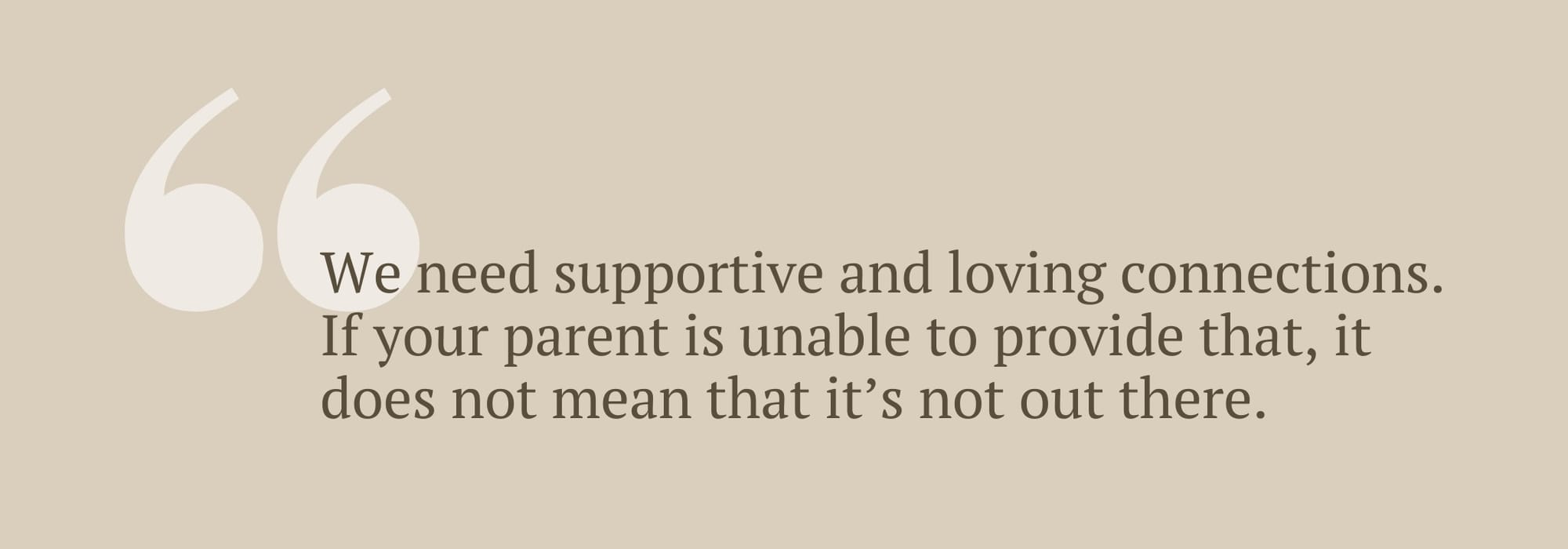
“We need supportive and loving connections. If your parent is unable to provide that, it does not mean that it’s not out there. Find your people,” she says.
Olena also recommends redefining the relationship if the parent is causing distress: “Instead of bringing emotion into the relationship with the hope of being understood, it can be helpful to find boundaries that will make you feel safer in the dynamic. [...] If the relationship is causing harm, you may need to limit contact. This is something we get to do as adults, but can’t do as children. It can be healing to make that choice.”
It takes time to move through the haze of narcissistic parenting, and develop those all-important boundaries, but understanding and validating your experience is a stride towards living in your own spotlight.
Comments