
From handwritten letters to hands-on hobbies, here’s why going analogue could help you slow down, save money, and reconnect with what really matters
From cashless payment systems to online meetings, it seems that much of our lives exist in the digital realm. And while using online tools and staying connected isn’t inherently bad, there’s a growing movement of people opting to intentionally move themselves offline by hopping on the trend of ‘going analogue’.
What does it mean to go analogue?
Positioned as a way to resist the harms of online living, going analogue is about sourcing ways to live a fulfilling life that doesn’t revolve around the digital world. While there are elements of modern life that mean a complete digital detox is unrealistic as a long-term solution, enthusiasm for this analogue trend stems from exhaustion with an ‘always online’ culture, and instead, returns us to acting with intentionality.
It could be choosing to send an old-fashioned letter to your long-distance bestie instead of a video chat, swapping a gaming session for a hands-on hobby like painting or crochet, or permanently ditching specific platforms, like Spotify or Netflix, in favour of physical CDs and records.
Why go analogue?
More than a passing trend, going analogue has real potential to improve your physical and mental health for a variety of reasons.
Swapping the infinite scroll for the slowness of analogue activities gives your brain and body a chance to be more intentional. Research suggests that slow thinking is essential for good mental health, offering us the chance to self-regulate and contemplate before we act. A 2015 study, in Trends in Cognitive Sciences, argues this slower approach could actually be a “signature of optimal brain function”.
When you switch to in-person activities, such as craft classes, book clubs, or writing groups, you also benefit from a kind of social connection that can’t be found online. One paper from 2023, published in the Journal of Interprofessional Education & Practice, reports that strong social connections like these are linked to better health and longer life.
In many ways, analogue hobbies are also more financially accessible than the ways we typically spend our free time. For example, switching from online streaming services to reading books can save you money on subscriptions (especially if you make use of your local library or online services, such as BorrowBox), whereas sewing can allow you to repair or revitalise existing items instead of purchasing new ones.
It’s a rejection of leisure activities that rely on consumerism that is at the heart of the trend – celebrating the power of simple acts such as repeated use (think jigsaws and board games), or investing your personal labour in something (such as cooking from scratch or growing herbs).
As a bonus, less time in digital spaces limits your exposure to the swathes of marketing designed to nudge you into unnecessary spending. Not only does this have a practical impact on your bank balance, but it can also become a form of activism – restoring power and agency over where you place your energy and attention.
So, if the goal of the going analogue trend is to detach from the online world and reconnect with real life in a tactile, creative, and soothing way, how can you get started?
Analogue activities to try at home
Going analogue isn’t about spending all your time and money on a new hobby that you’ll get bored of within a few weeks. The goal is to switch off and get back in touch with the physical world, so you should focus on activities that are free or low-cost, and have some sort of sensory element, such as a connection to nature, using your hands to create something, or physical movement.
For creatives: Try switching your evening doomscroll for an arts and crafts activity. You might do some mindful colouring (Vinted is great for second-hand pens and books), experiment with pressing flowers, start making your own greetings cards, or sketch a self-portrait.
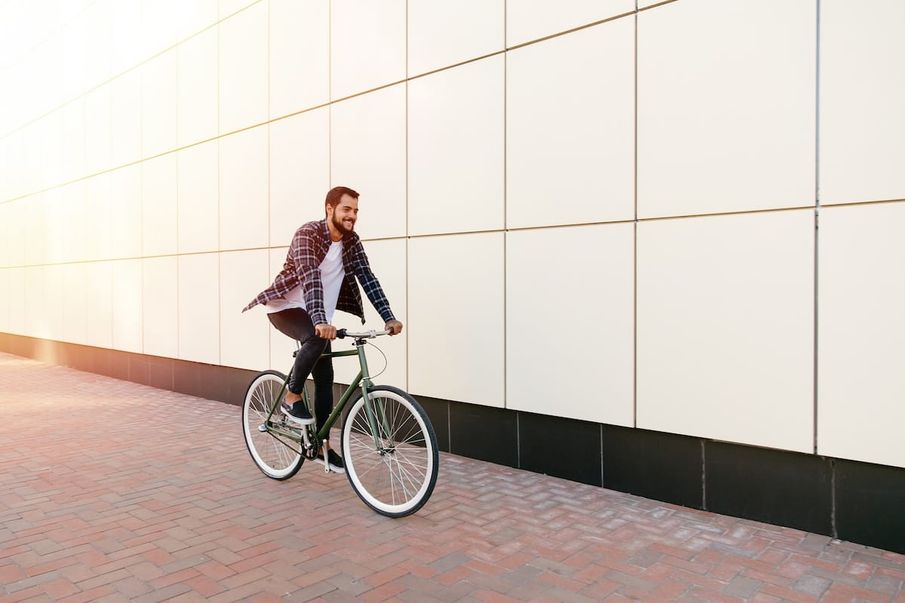
For feeling grounded: To connect with the body or the natural world, why not get your bike out of the shed and take yourself on a ride to your nearest greenspace? Once there, you can lean into analogue living even further by reading in the shade or doing some crochet while you listen to the birds. Even a headphone-free walk around your neighbourhood can provide much-needed disconnection from the online world.
For daily habits: You could keep a paper journal by your bed to reflect at the end of the day instead of reaching for your phone, use a wall calendar to map out plans rather than relying on app notifications, or cook a new recipe from a dog-eared cookbook instead of scrolling for inspiration online. Board games, card games, and puzzles are inexpensive ways to spend an evening with family or friends without a screen in sight, and they can be returned to again and again without additional cost.
For slow living: Consider tending to a windowsill herb garden, learning a basic knitting stitch from a library book, or visiting a local repair café to fix something that’s been sitting broken at the back of a cupboard. Writing a postcard, printing out your favourite photographs to create a physical album, or borrowing sheet music to practise an instrument, are all gentle ways to bring more texture and presence into your free time as well.
Going analogue doesn’t have to mean rejecting technology entirely. It can be about carving out pockets of your day that are intentionally screen-free. Because, sometimes, reconnecting with the world around you – the feel of paper between your fingers, the rhythm of a walk, a meal made from scratch – is all it takes to remind you to slow down. And those small, deliberate shifts can add up to a life that feels calmer, fuller, and more your own.
Comments