
From thinking of someone moments before they call to spotting the same symbol everywhere you turn, coincidences can feel more than random. But what does psychology say about these experiences?
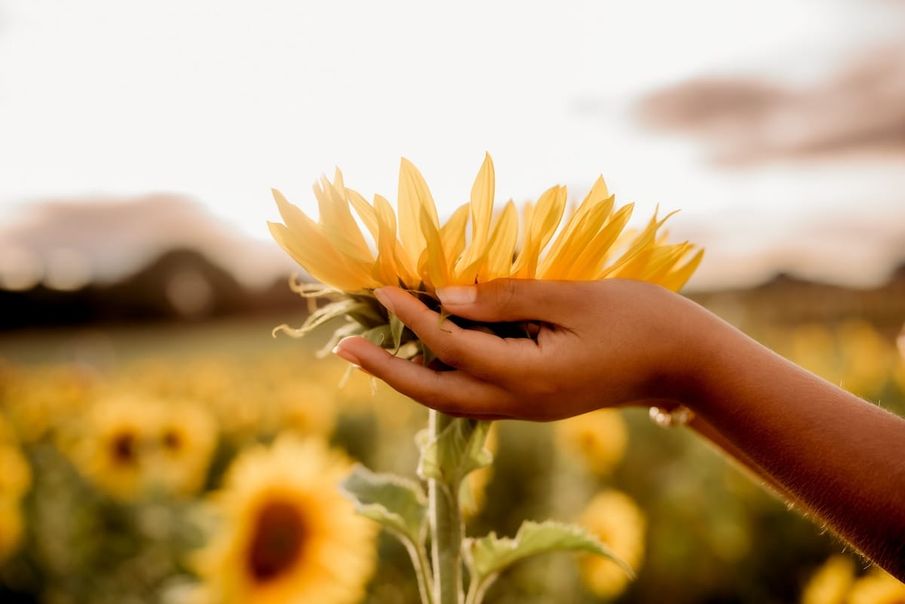
A few years ago, I had my first tarot reading. Among the cards’ rich symbolism, the detail of a sunflower stood out just a little more than the others. I had a lot on my mind at the time – going through a divorce and moving back in with my parents – so I barely gave it a second thought. But a few minutes later, with my music on shuffle, time stood still when a song called ‘Sunflower’ played through the speakers. Out of thousands of tracks, why that exact one, immediately after seeing the symbol?
Had it not played, I’d have forgotten the sunflower entirely. Instead, as the days and weeks passed, I started noticing them everywhere. Spray-painted on walls, written about in poems, hiding in charity shops, and sprouting from the soil. Life had been dark, but because of this coincidence, it genuinely began to feel brighter.
But is there really anything to support the idea that coincidences are magical? Or are they just human brains desperately grasping at patterns as a way to find meaning?
Signs of synchronicity
Widely considered one of the most influential psychologists of all time, Carl Jung argued that certain coincidences can feel so meaningful that they seem to point to a connection beyond pure chance. He named this phenomenon ‘synchronicity’ – when two events occur together in a way that feels significant, despite them having no immediately obvious causal link.
Jung believed synchronicities offered valuable insight into the psyche. For example, you might be considering moving abroad and repeatedly encounter the same message in different places – on television, a book, and then a podcast episode. While these events may be coincidental, reflecting on why they feel significant can help uncover thoughts and feelings rippling beneath the surface.
Counsellor Hannah Cheriford highlights that it’s how we interpret these coincidences that matters. “When a person encounters a coincidence that shapes or changes them, it may gain depth as it is incorporated into their story.
Events that ‘felt like a sign’ feel meaningful because they become turning points in a person’s life.”
What are the chances?
However, while some people see coincidences as messages from the universe, statisticians argue that they’re a natural consequence of living in a world filled with endless possibilities.
One explanation is known as the ‘Law of Truly Large Numbers’, which suggests that when there are enough people, places, events, and opportunities for things to happen, even highly unlikely coincidences become likely.
We also tend to notice coincidences that resonate with us (like my sunflower experience) and overlook the countless events that don’t (what about all the other many symbols included in that tarot reading?)
This idea is strengthened by several well-known cognitive biases that influence how we perceive the world. Take confirmation bias – our tendency to notice and give weight to information that supports what we are already focused on. In my case, once the sunflower had become meaningful, my attention naturally gravitated towards it. The hundreds of symbols I encountered every day faded into the background, while every sunflower seemed to stand out.
Interestingly, this bias is unique to the individual. “If we have grown up in an environment that tells us we are special, lucky, and good things will come our way, we’re more likely to interpret our experiences through this lens,” says Hannah. “Conversely, if we’ve been raised to believe we are unlucky or that the world is unkind, the coincidence of hitting all red lights when we are already late may reinforce our experiences of a hostile world.”
A similar phenomenon is the ‘frequency illusion’, sometimes called the Baader-Meinhof effect. This happens when something you’ve recently heard about seems to crop up everywhere. The argument is that these ‘signs’ aren’t appearing more often, you’re simply noticing them more than usual.
Of course, too much of anything can become problematic, and for anxious or hypervigilant folks, it’s worth noting that coincidences have the potential to trigger a fight or flight response.
“For some people, this style of anxiety can become so intense that they begin compulsive behaviours to try and manage it,” warns Hannah. “A connection might be that their thinking has somehow influenced the world outside of their mind. Under the weight of the belief that their thoughts could impact the world around them, they might begin compulsively trying to suppress all negative thinking.”
This can contribute to a distressing and intensifying cycle, which Hannah notes could lead to self-isolation in the face of this frightening paranoia, in which case, professional support is required.
Meanings that matter
Importantly, understanding the psychology behind coincidences doesn’t necessarily make them less valuable. Whether a coincidence is the product of selective attention or something more mysterious, the emotional impact still matters.
The meaning I attached to sunflowers marks an upward turn in my story because it became a visual reminder to ‘turn towards the light’. During a difficult life phase, it had a tangible impact on my capacity to not just notice the brighter moments, but to actively seek them out.
For you, meaningful coincidences could lead you to a new hobby that nurtures your inner child; a novel that shifts how you see yourself; a local market where you bump into your future partner.
Perhaps the most useful question isn’t whether a coincidence was destined to happen, but why it resonated with us in the first place. Start by asking what thoughts, hopes, fears, or desires the ‘sign’ has brought to the surface.
Looking back, I still don’t know whether the sunflower was a spiritual sign, a statistical inevitability, or a survival instinct. What I do know is that it arrived at a moment in time when I needed hope, and that meaning was real enough.
Comments