
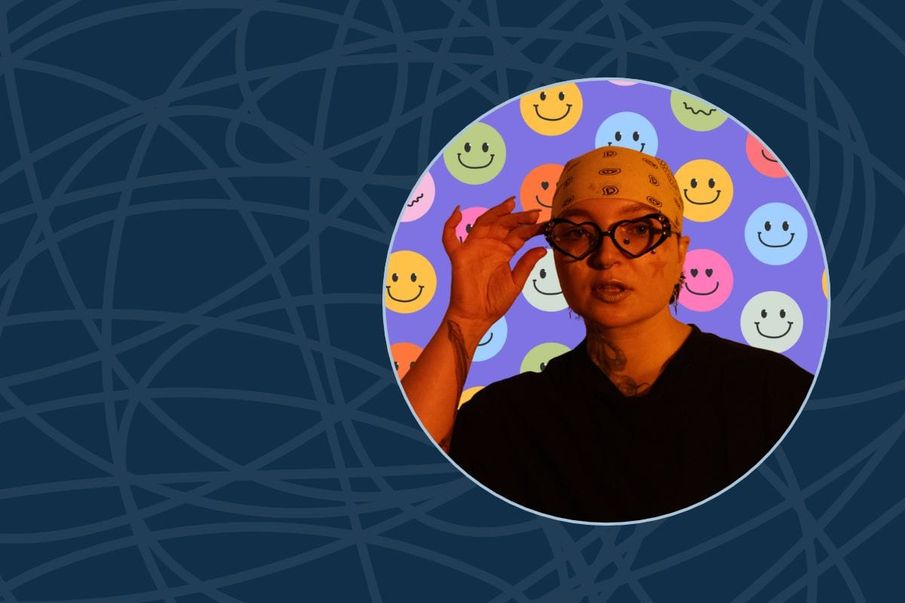
Over one week, River Williams, 30, a copywriter from Aberaeron, west Wales, discovers how much small acts of courage matter in the face of anxiety
Sometimes, I feel like my body is already anxious before I even get out of bed. One morning this week, I woke up with a tight feeling in my chest and a sense of impending doom. I had a hospital appointment for an X-ray of my head, as well as a full day of work, and the combination of getting up early, feeling rushed, and knowing I was going to a hospital was playing havoc with my anxiety.
I have pretty bad health anxiety, so going to any medical facility is a big deal for me. But I was determined to get this scary thing done and hopefully come out the other side feeling a little more confident than when I went in.
Everything went OK, and after that I decided to work from a coffee shop in town. Partly as a reward, but also because being around other people makes me feel safer when my health and death anxiety is particularly loud.
My relationship with anxiety has always been intense. From the age of 13, I was sick from anxiety every morning and could barely leave the house. Shortly afterwards, I was diagnosed with generalised anxiety disorder (GAD) and clinical depression and put on medication.
Anxiety is incredibly physical for me. I experience skin picking and biting, teeth grinding, and temporomandibular disorder (TMJ), a condition affecting the movement of the jaw – as well as tremors, aches, dizziness, and migraines. Those physical symptoms are some of the hardest parts to deal with because they can interfere with everyday life, making it hard to function, and they can feed directly back into my health anxiety.
Say I feel a pain in my body; my mind can start telling me all sorts of things about what it means. If I experience pain in my left breast, for example, I can become convinced it’s cancer. Before long, I’m imagining myself on my deathbed and the prospect of my partner having to live without me. That’s how quickly my health anxiety can take me from an everyday sensation to the worst possible outcome.
And then the anxiety itself creates physical symptoms, which create more anxiety. It can become a relentless cycle. The symptoms are more intense first thing in the morning, last thing at night, and when I have something significant planned. Recently, I’ve felt anxious almost all of the time, but evenings can be really tough. Some nights, a hot shower, taking my medication early, or distracting myself with a video game can take the edge off. Other nights, nothing seems to make a difference.
When an anxiety attack has already taken over, box breathing is my go-to approach. A few weeks ago, I was lying in bed trying to sleep when I began feeling dizzy. Before I knew it, I was panicking, and my chest hurt, and my breathing had become shallow.
I tilted my head back and concentrated on my breathing: five seconds in, hold for two, five seconds out, hold for two. I kept doing that for about five minutes until my heart rate decreased, and eventually I fell asleep.
This week challenged me in other ways, too, because I went to an infrared sauna for the first time. On the bus there, I was picking my fingers, biting my cheek, and clenching my jaw because I didn’t know what to expect. Once inside, I could feel an anxiety attack building and, at one point, became convinced the heat was causing me to have a heart attack. But, thankfully, I recognised what was happening and tried to challenge the thought. I used my breathing techniques and managed to keep the panic at bay, which I’m proud of. And the sauna itself was fantastic! I usually don’t deal well with that kind of heat, but this was really fun.
I did something else that felt big this week. I travelled away from home and stayed at my dad’s house to dogsit. I hardly ever leave the town where I live, and I hadn’t spent a night alone for quite a few months, so I was nervous about how my anxiety would respond.
On the first night lying in bed, I noticed my chest becoming tight and hurting slightly on the left – one of my tell-tale signs that my anxiety is rising. But after a good night’s sleep, I felt a lot better. I spent much of the next day working on my laptop in the garden, getting some sun, and the warmth on my skin helped me feel grounded and present.
I’ve always been self-aware about my behaviour, but for a long time I didn’t understand my anxiety well enough to know what might help. Over the past three or four years, I’ve got to know it better, and now I recognise some of the signs and know when to try the exercises that work for me.
That doesn’t mean I can always push through. There are days when anxiety takes over, and I have to change my plans, and the physical symptoms and fatigue become too much. The reality is that I sometimes cancel meetings or social events because I know turning up would take more out of me than I can cope with.
By Sunday, after several days away, I knew I had reached my limit. On the journey home, we stopped at Puzzlewood in the Forest of Dean, and it was busy; the paths were steep and slippery, and I was just exhausted. Soon I had a tight chest, shallow breathing, and a TMJ flare-up, and I was frustrated with the people around me, my partner, and myself. Eventually, I realised that what I actually needed was to just go home, get back to my routine, sleep in my own bed, and see my cats.
But when I look back at the week, I did have loads of wins to celebrate! I went to the hospital despite my health anxiety. I tried the sauna. I spent two nights alone. I recognised when I was at my limit.
I used to expect myself to feel entirely better after trying a new exercise or doing a little work on my anxiety. Now, I know it doesn’t work like that. For me, progress is much slower.
So while my anxiety is still with me, I know that I’m adapting and always finding new ways to stop it from taking over.
Find out more about River at riverwritesstudio.com.
Comments