
Welcome to Anxiety on Your Mind, the series that explores what it’s really like to live with anxiety. In this issue, Jenny Holliday, a 48-year-old journalist and career coach from Chipping Norton, Oxfordshire, shares her story…
Jenny Holliday as told to Fiona Fletcher Reid
As a freelance journalist and career coach, I’m pretty good at holding space for other people’s emotional experiences – but holding space for my own is a different story! Lately, that pressure feels a little more intense, because I’m perimenopausal, and the hormonal shifts have introduced a new layer of unpredictability to my anxiety. Working from home can already be isolating; add fluctuating hormones into the mix and it becomes harder to trust your own internal narrative.
Mornings are the time of day when I often feel my anxiety the most. Whether it’s the anticipation of what’s to come, or just my hormones, I’m not sure. But this week starts with an extra anxious edge after a busy weekend where I went out with friends. I don’t drink anywhere near as much as I did in my younger days, but, even with the reduced consumption, I’m finding that alcohol is having a bigger impact on my body and mind than ever before.
The nerves really kick in as I prepare for a client meeting. I know that these chats normally go fine, and that I’m capable of handling any potential conflict, but, somehow, these more ‘serious’ conversations always make me nervous. I think it’s all tied up in this idea of worrying that I’m not good enough. Am I delivering the best work? Am I attracting the right people? It’s a constant hustle mentality that I don’t necessarily agree with, and I think it actually contributes to the anxiety.
Because I work alone, I find my inner critic particularly hard to silence – which creates an anxiety spiral. My anxiety makes me worry about something, like finding more work, then I experience worsening symptoms, like racing thoughts and shallow breathing, then I notice I berate myself for having the anxiety, which makes me feel even worse!
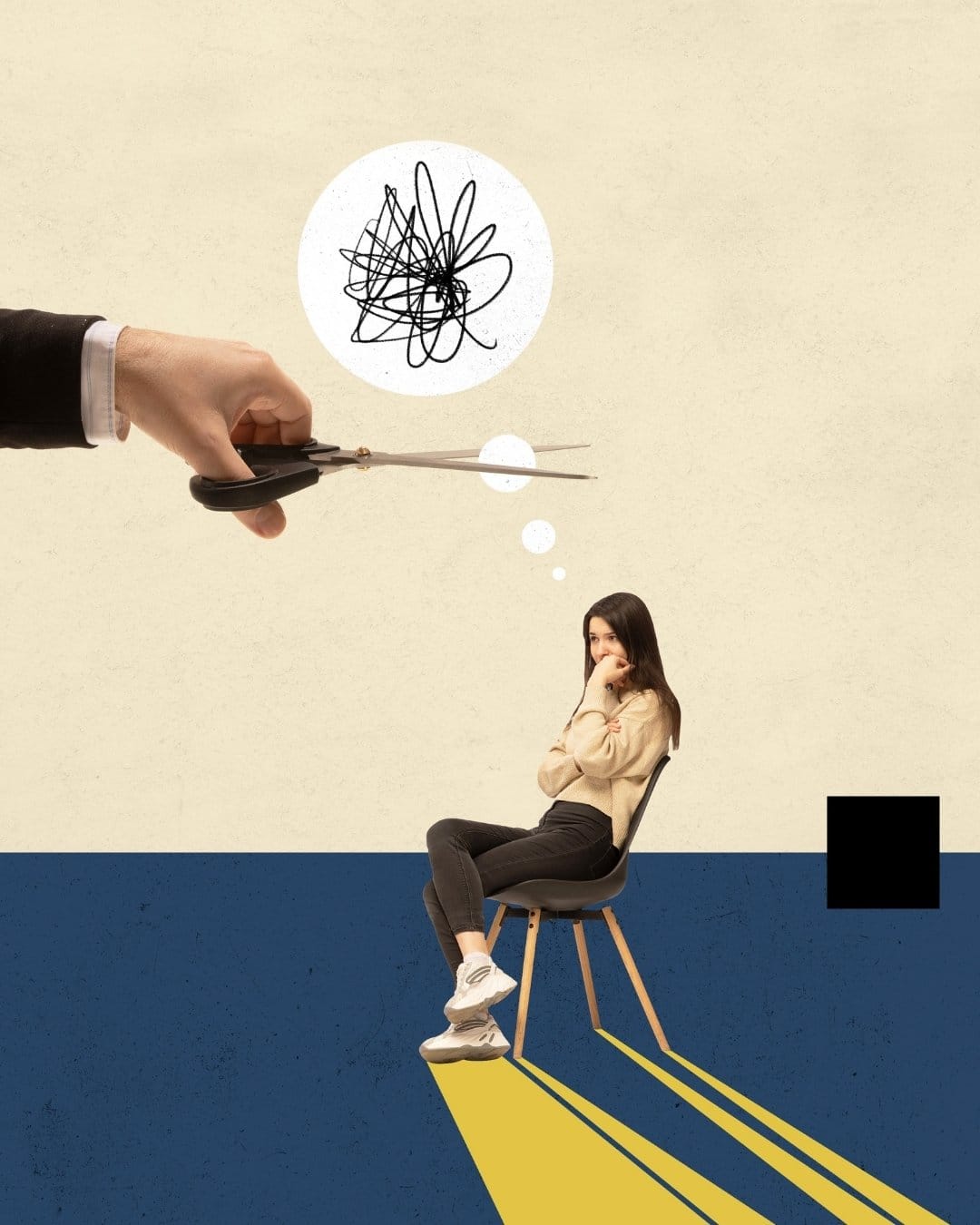
I notice I can get quite childlike with my response to anxiety, in that I get easily frustrated and panicky, kind of like a toddler. It’s easy to laugh about it in retrospect, but, in reality, I do need ways to channel and release that energy, and I find that physical exercise really helps with this. So, you’ll often find me on a long walk with my husband and our two dogs, or getting in a gym session, where I can, between client work.
Thankfully, that slightly intimidating conversation I had with a client on Monday gets somewhat resolved midweek, so that feels like a weight has been lifted. I also come on my period on Wednesday, which I find seems to level out my anxiety – hormones are so unpredictable when you’re perimenopausal, so, with hindsight, now I can see that maybe my anxiety at the start of the week was more biological than a reflection of my capabilities. It’s hard to tell, and that’s what makes menopause so confusing and anxiety-inducing – it’s harder to understand what’s going on in your own body.
I’m glad to be able to head into London on Thursday for a networking event. These are the days I really enjoy – getting away from my desk, making new connections, and having unexpected and interesting conversations. Meeting new people at events like these is something I cherish. Even though I get anxiety about some kinds of human interactions, these events are fun. I’ve made many good friends who continue to support me and help me feel connected to a wider community, which is hard to do when you are a company of one.
On Friday, a fellow coach and I meet up locally for coffee and co-working. Not only does it help me stay focused as I work, but the conversation genuinely soothes my worries. We’re the same age, both going through similar experiences, and our chat helps me see that the anxiety I’m feeling is normal, especially considering all the physiological changes I’m going through.
By the end of the week, I can see more clearly that not every anxious thought deserves to be believed. Some of them are fuelled by old stories about productivity and worth; others are amplified by hormones I can’t fully control. Separating the two isn’t always straightforward, and that uncertainty can be unsettling in itself.
What helps is remembering that anxiety isn’t linked to my capability; it’s just a signal. Sometimes it signals to me that I care deeply about the clients I serve. Sometimes it nudges me towards connection, sometimes towards slowing down.
Freelancing and perimenopause both ask for resilience in different ways, and what I’m learning is that resilience doesn’t mean that the only way to feel strong is to push through regardless. It means listening more closely, questioning the voice in my head, and staying connected to people who remind me that what I’m experiencing is human. And, for now, that feels like enough.
Comments