
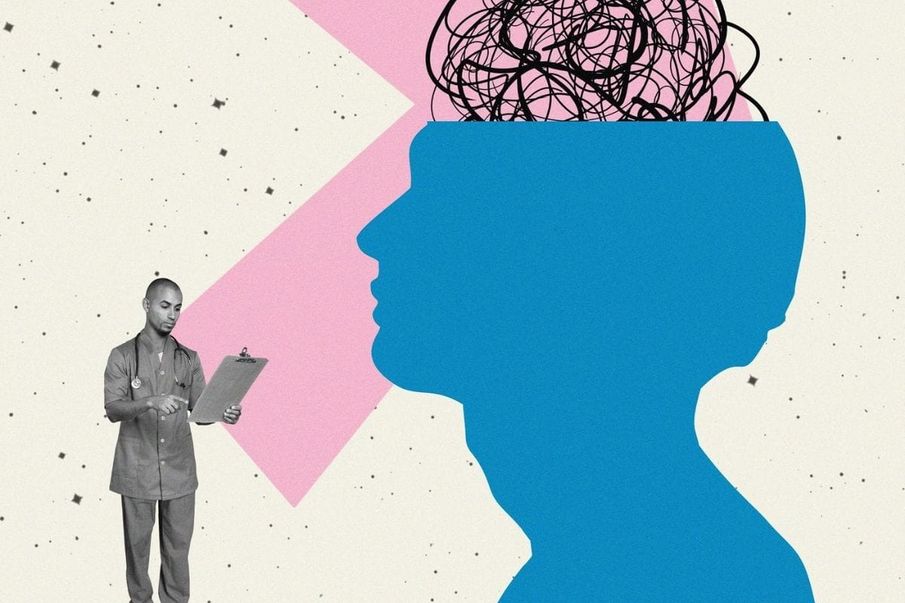
There’s often a picture painted in the media that mental health conditions are being ‘overdiagnosed’, but, when we investigate, what’s the reality, and how does this perception impact access to support systems?
There is an ‘overdiagnosis’ of mental health conditions, according to the UK’s health secretary, Wes Streeting. Speaking to the BBC in 2025 about Labour’s welfare reform plans, which included targets to reduce the number of people who can claim disability benefits, the MP agreed with suggestions that increasing sensitivity to mental health challenges risked pathologising ‘normal’ experiences.
Streeting’s comments chimed with past statements from other political figures, including former Prime Minister and Conservative leader Rishi Sunak, who, in 2024, claimed that Britain was suffering from a “sick note culture”, and ex-PM and Labour leader Tony Blair who, during a recent podcast appearance, also warned against “medicalising the ‘ups and downs’ of life”.
Demand for mental health support is on the rise, with a record 5.2 million referrals for mental health services made during 2024, up 37.9% from 2019, a report from the British Medical Association revealed. While the pandemic saw a marked increase in individuals seeking help for conditions such as anxiety and depression, rates of reported mental illness have been steadily climbing since 2016.
The upsurge is most stark among children and young people, with almost five times as many under-18s reportedly in contact with mental health services compared to a decade ago, according to NHS figures.
Against this backdrop, concerns over an alleged crisis of ‘overdiagnosis’ have gained momentum, suggesting that societal definitions of mental ill-health and neurodivergence are being stretched ‘too far’, and ultimately pushing public services to ‘breaking point’. Responding to these claims, however, experts caution that framing the growing demand for mental health support as an issue of diagnostic excess paints a misleading, and harmful, picture.
“The story is not one of over-detecting mild difficulties.Rather, it’s one of unmet need and, for many, ongoing under-recognition,” explains Dr Sabina Dosani, a consultant child and adolescent psychiatrist and clinical academic.
For Dr Dosani, increased diagnostic recognition actually represents something hopeful: the possibility that people who were previously overlooked are now being seen, and given opportunities to access the support they need. The fact that more people are asking for help reflects a powerful retaliation against stigma, challenging perceptions that suffering should be endured in silence and solitude.
Overdiagnosis or evolving understanding?
Although the rise in diagnoses is, in part, driven by a complex interplay of biological, developmental, social, and systemic factors, Dr Dosani also attributes this to evolving understandings of mental health conditions. “When I trained, autism and attention deficit hyperactivity disorder (ADHD) were largely taught through a male framework. Girls who masked, compensated academically, or channelled distress inward, were missed.
“I only began fully recognising the breadth of female autistic and ADHD presentations once I was already a consultant.”
Minoritised ethnic groups have historically experienced inequalities in both access to and quality of mental health services as well. A 2022 review of dominant mental health models, published in PLOS Medicine, found that monocultural and reductionist assessment and treatment frameworks represent a significant barrier to mental health care, often due to a failure to recognise distress linked to particularised experiences of migration, systemic racism, and complex trauma.
Even after securing a diagnosis, many still face long waits for interventions, leading to worsened conditions and exacerbated distress. As Dr Dosani tells me, “The heartbreak I hear from parents is not over diagnostic labels, it is about wanting their child to flourish, and struggling to access the means to help them do so.
“When support isn’t accessed early, families arrive at services in crisis, not because the problems appeared suddenly, but because they were not recognised or resourced sooner.”
Social media and self-diagnosis
With many unable to access timely mental health support and treatment through official pathways, social media has become a go-to source of guidance. However, experts warn that these platforms risk fuelling incorrect self-diagnosis, and dangerous misinformation.
Dr Rachael Kent, a senior lecturer in digital economy and society at King’s College London, explains that social media sites like Instagram and TikTok operate as unregulated public health platforms, where content caters to the demands of the attention economy, rather than clinical accuracy.
“Social media enable the reduction of complex medical conditions into oversimplified, reductive, and quite often sensationalised formats,” she explains, adding that platform economics reward ‘trendy’ and aestheticised representations of neurodiversity.

“This minimises the nuances of what those conditions look like for the person experiencing them,” she adds.
Fajri Aitken, assistant headteacher at The Courtyard Islington, a specialist school supporting students with autism spectrum condition, also shared his frustration over the rise of content promoting the self-diagnosis of autism and ADHD. “I see clinically undiagnosed creators share their quirks, their sensory likes and dislikes, wrapped up in some atmospheric music, captions, and carefully edited frames. It makes neurodiversity into a ‘cute personality type’.
“This is an insult to the students I serve who struggle with getting out of bed due to their diagnosis. It dismisses rigorous processes of getting a diagnosis in order to provide the right support in education and day-to-day life.”
Although social media platforms offer valuable avenues for connection and community, their emphasis on virality through curated relatability has led to homogenised portrayals of conditions, with creators often reducing ADHD symptoms to ‘trouble concentrating’, and OCD to ritualistic behaviours.
“It creates a sense that everyone’s on the spectrum a little bit, which is medically not true,” says Dr Kent.
Yet, with claims of ‘overdiagnosis’ driving cuts to mental health services, reliance on social media as a self-diagnostic tool is likely to intensify. This leaves even more people vulnerable to misleading information, hindering rather than helping them find appropriate knowledge and care.
“Young people are not turning to TikTok and online forums because they are attention-seeking or impressionable,” says Dr Dosani. “They are doing so because healthcare and education systems are overstretched, waiting lists are long, and formal support is difficult to access early.
“The solution, as I see it, is not to shame teenagers for seeking information. It is to build clinical pathways that are accessible, timely, and humane, so that online content becomes an entry point to help, not a substitute for it.”
Comments