
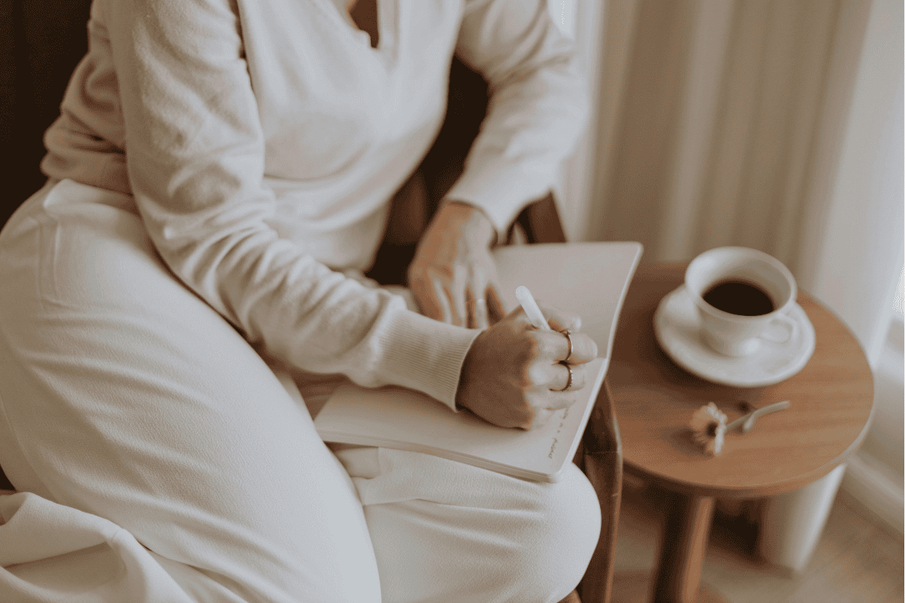
How to gently close out the year without putting pressure on ourselves to be perfect.
For most of us, the end of every year is filled with contradictions. We naturally crave space to reflect on the last 12 months, and yet, there's also exhaustion – a bone-deep tiredness that makes even the thought of "year-end planning" feel like one more thing on an already overwhelming list.
If you're feeling caught between wanting clarity and needing rest, you're not alone. Reflection doesn't have to mean hours of journaling or creating show-stopping vision boards.
It can be quieter than that, and still be deeply meaningful.
Why can end-of-year reflections feel stressful?
The end of the year carries a weird pressure. There's the narrative that we should have everything figured out by 1 January, complete with perfectly formed goals and lots of motivation. Meanwhile, we're often running on empty, juggling work and family commitments, not to mention the accumulated tiredness of an entire year.
In that busy, burned out state, the gap between the person we think we 'should' be and the person we actually are right now – can leave us feeling stuck, regretful, or even ashamed.
The key is recognising that meaningful reflection doesn't require us to have it all together. In fact, the most honest reflections often happen when we're willing to meet ourselves exactly where we are.
Here are five gentle ways to look back on your year
- Acknowledge what you survived
Before rushing to evaluate what you achieved, simply recognise that you made it through. Every year has challenges – perhaps some you anticipated, others that took you by surprise. Either way, taking a moment to witness your resilience, without judgement or comparison, is an important form of reflection in itself. To honour this, you could write a thank you letter to your body and mind, expressing gratitude for getting you here. - Notice the small shifts
Major life changes can define our year, but often, it's the small, almost invisible shifts that matter most. Perhaps you started saying no to that person who always takes advantage of your generosity. Maybe you deepened a friendship, or started saving for your future. These personal wins in how we move through the world are worth noting, even if they don't look impressive on paper. Try writing a list of 20 small, meaningful shifts that have happened this year. - Write without an agenda
Set a timer for 10 minutes and simply write about your year without any goal in mind. There's no pressure here to have any profound insights on the last 12 months – just let your mind wander and allow thoughts to flow onto the page. Sometimes, the act of writing itself creates the clarity we're seeking, without us having to force it. Try these journaling techniques for more ideas. - Create a "what energised me" list
Rather than focusing on achievements or failures, reflect on what genuinely made you feel alive this year. Which activities, people, or moments left you feeling empowered rather than depleted? This information is gold dust when it comes to making choices and plans for the year ahead. - Offer compassion to your past self
When looking back on decisions that didn't work out, or goals you didn't meet, try to talk to yourself the way you would to someone you love Past you was doing the best they could with the information, resources, and emotional capacity they had at the time. You survived even the bad days, and that is worth celebrating in its own way.
If you're already burnt out
Perhaps you're reading this while already feeling depleted, wondering how you're supposed to reflect when you can barely get through each day. If that's where you are, please know that reflection can wait. Rest comes first.
When you do feel ready, start with just one question: "What do I need right now?" Not what you think you should need, or what would make you a better person – what would actually support your wellbeing in this moment?
Sometimes the most valuable insight we can gain is simply knowing ourselves well enough to ask for what we need.
Reflection isn't about tying your year up in a neat bow or forcing optimism you don't feel. It's about creating a bit of space to notice what was, to honour what you've been through, and to gently consider what might serve you as you move forward.
Comments