
Saunas, sea swims, and spending more time outside have long been part of life in many Nordic countries. Here’s what we can learn from these traditions – without buying into the hype
If you’ve found yourself tempted by an outdoor sauna, a cold-water dip, or a winter walk that somehow feels more virtuous because it’s Nordic, you’re not alone. Nordic-inspired habits have become big business in the wellness world, with centuries-old traditions repackaged as the latest route to better health. The trend has even earned its own name: Viking wellness. But despite the historical branding, what it’s really selling isn’t a Viking lifestyle at all.
So why are these Nordic rituals capturing our attention now, and what can they actually offer in terms of our wellbeing?
What is Viking wellness?
Unlike concepts such as mindfulness or the Mediterranean diet, Viking wellness is not a clearly defined philosophy and, perhaps disappointingly, has very little to do with historical Vikings.
It’s more of a catchy marketing umbrella used to describe lifestyle habits that (in varying degrees) reflect everyday life across the Nordic countries.
It borrows ideas associated with resilience, outdoor living, and traditional practices like saunas, cold immersion, barefoot walking, sea swimming, and forest bathing.
But ‘Nordic’ can’t be used to define a single culture, and practices differ depending on location. In Iceland, for example, geothermal energy has helped make outdoor bathing a year-round tradition, while Denmark’s mild climate has shaped different relationships with the outdoors.
With that said, there are some habits and activities that are worth a go.
Sauna culture
Although not exclusive to Finnish culture, saunas are far more prevalent there than in the UK. The country has an estimated 3 million saunas and that’s for a population of around 5.6 million people, making them more common than cars. Many Finnish people experience their first sauna as a baby, with the practice framed as a daily ritual rather than a luxury spa experience. But that doesn’t strip the sauna of its magic. In fact, traditional Finnish beliefs view the sauna as a sacred place imbued with the transformative power of ancestors and deities, as well as a special sauna elf who protects the space!
Nowadays, there is a huge appetite for saunas across the globe, including the UK. The British Sauna Society now lists about 850 saunas – and it’s predicted that the UK could become the world’s largest sauna market by the year 2033.
With studies finding that sauna use has an associated link with a lower risks of cardiovascular disease, alongside improvements in relaxation, circulation, and post-exercise muscle recovery, there are emerging evidence-based reasons why people might want to embrace the heat.
Cold plunges
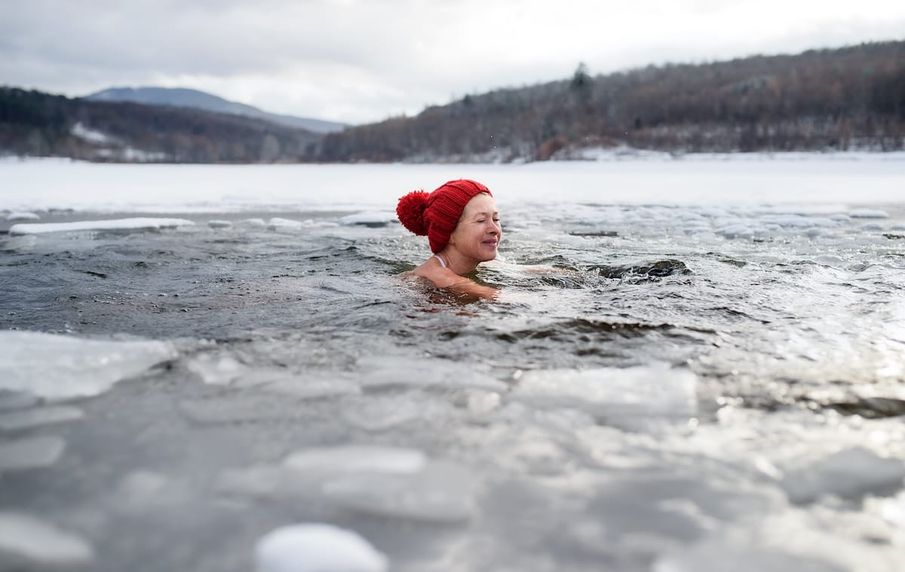
If saunas represent the warmth of Nordic living, cold water immersion is perhaps its best-known counterpart. Images of people slipping into icy lakes after a steaming sauna have become synonymous with Scandinavian wellbeing. While cold water swimming has long been part of Nordic life, today’s cold plunge trend embraces the invigorating ethos of stepping out of your comfort zone.
Cold water fans often describe the experience as a mental reset, combining the benefits of being outdoors, moving your body, and connecting with others as part of your local swimming group.
A 2024 article in GeroScience reports that cold water exposure does lead to notable physiological changes. Although the studies are small, evidence suggests that cold water therapy could reduce the risk of cardiometabolic diseases. It also triggers the release of stress hormones and endorphins, enhancing alertness and lifting mood, serving as a chilly but potent option for some mental health concerns. Cold dips have even been seen to reduce inflammation, boost your immune system, help with sleep, and speed up exercise recovery.
Outdoor living
One of the defining characteristics of life in many Nordic countries is the belief that the weather shouldn’t dictate whether or not you spend time outside. In Norway, this commitment to celebrating time outdoors is captured by the concept of friluftsliv, which loosely translates in English to ‘open-air living’.
Rather than a structured exercise programme or TikTok trend that will disappear in a month, it captures the idea of spending time in nature throughout the year, whether that’s wandering through woodland, hiking in the mountains, or drinking a coffee on the patio. Not as an afterthought, but a natural way to exist in the world.
The good news is that you don’t need dramatic landscapes or sub-zero temperatures to experience the benefits – although arguably we can access both of them in the UK from time to time!
It might be a relief for you to hear that research shows as little as 15 minutes spent outdoors improves cardiovascular health by reducing blood pressure and resting heart rate. And if you struggle to find the energy for workouts, it’s worth knowing that exercise in green spaces may also feel more enjoyable and require less effort, even though you might actually be working harder.
In many ways, the appeal of Viking wellness isn’t that it offers anything new or revolutionary. Instead, it reminds us that connecting with the natural world doesn’t have to be reserved for getaways or special occasions. And that some of the best ways to feel better are actually free.
You don’t need to live beside a Norwegian fjord to take inspiration from Nordic living. A brisk walk, a warm sauna, or a dip in the sea might be enough to remind you that feeling better can start with stepping outside.
Comments