
For decades, women have been taught to wait their turn, play nice, and stay grateful. But for many women over 50, confidence isn’t about climbing higher — it’s about being brave enough to shed old rules.
All the women who inspire me are older than me.
Partly because I love to take advice from people who are a few steps ahead of me, and partly because there are some women who clearly hit their stride in midlife.
Feminist journalist and social-political activist Gloria Steinem once said: "Women may be the one group that grows more radical with age. One day an army of grey-haired women may quietly take over the earth".
I think about that a lot, and as I edge closer to my 40th birthday, I've noticed my urge to 'grow more radical' – but the gap between wanting and actually having the confidence to do so is still wide.
In some ways, I’m more shy than before, but in others, I've grown into my sense of self. I’ve stopped apologising quite so much and stopped shrinking to make others comfortable – but I also know that there is more I can do to boost my confidence as I age.
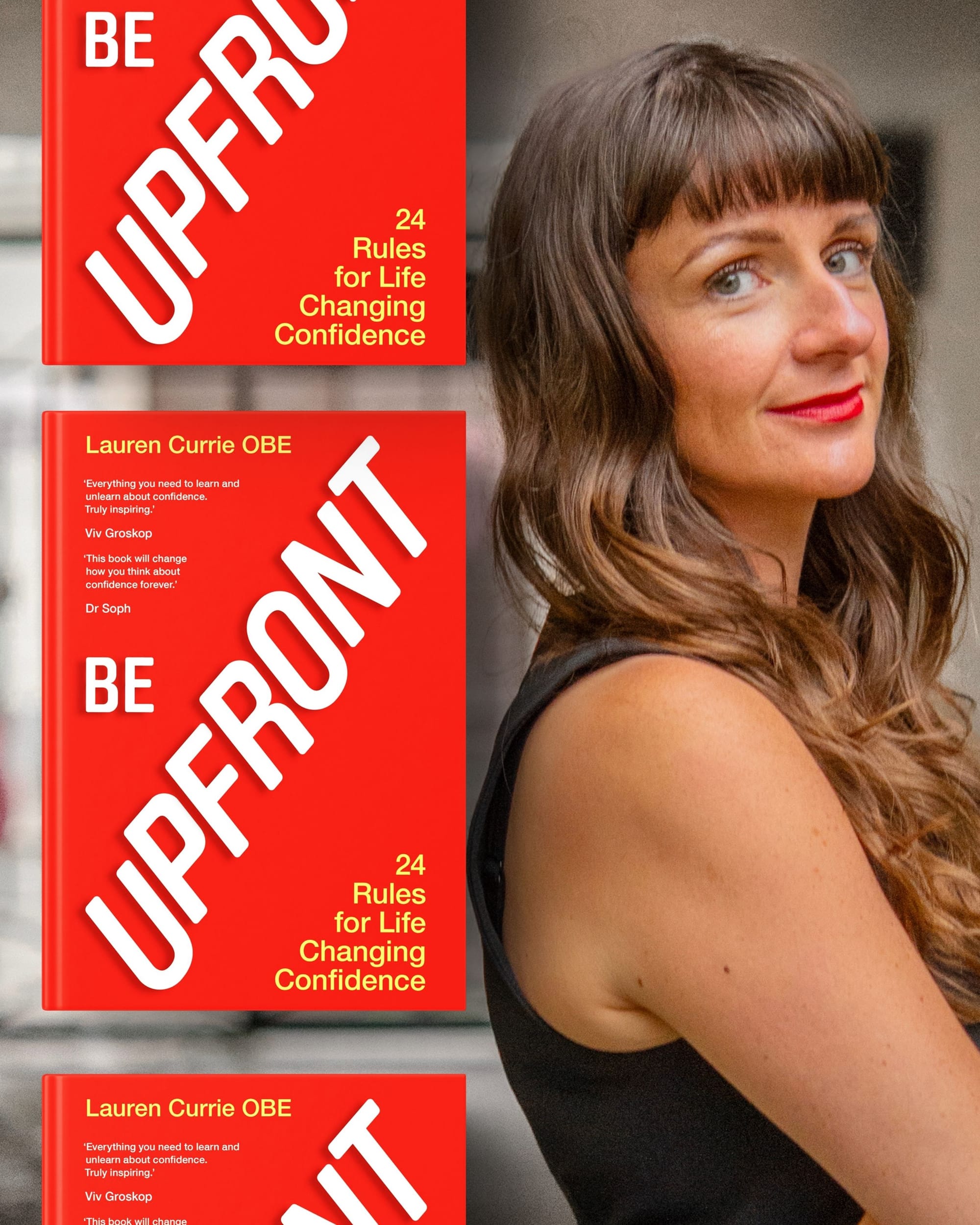
So, when I had the chance to speak to award-winning entrepreneur, author, and campaigner Lauren Currie OBE, who has founded a confidence movement that has up-skilled over 15,000 women worldwide, I knew she would be able to share some words of wisdom about midlife confidence.
“Women over 50 aren’t looking for permission anymore,” Lauren says. “They’re looking for alignment. They’ve achieved. They’ve built. They’ve raised. They’ve endured. And yet many are still asking, ‘When does confidence arrive?’”
The cost of speaking up
One of the reasons that confidence may shift as we age is because what's at stake has changed. According to Lauren, for younger women, speaking up can feel risky because there’s so much to gain – reputation, promotions, opportunity.
“For older women, it can feel risky because there’s so much to lose,” she explains. “Stability, long-held relationships, the identity they’ve built, the comfort of being known in a certain way.”
Yet, among the women engaging with her work, including her new book, 'Be Upfront: 24 Rules for Life Changing Confidence', she’s noticed that confidence in midlife is often about striving less, and, instead, learning to let go.
“Being upfront in midlife is less about climbing and more about shedding,” she says. “Shedding the performance, the apology, and the version of ourselves that was rewarded for staying small.”
So what might that 'shedding' look like?
Let go of the idea you should simply be grateful
The belief that wanting something different is selfish, or indulgent, can prevent women from pursuing new directions, whether that’s changing careers, starting a creative project, or taking up space in new ways.
Many women have been taught that reaching midlife means settling into the life they’ve built and being grateful for it. Slowing down and easing off on big ambitions is often baked into the narrative of 'growing old gracefully'. But don't we have the right to continue to dream big for ourselves?
Lauren says that being happy with your lot is an outdated rule that deserves to be discarded. “Gratitude and hunger can coexist,” she says. “Blooming again at 66 is not indulgent. It’s radical.”
Challenge the belief that it’s too late
Of course, having that desire to step into a new chapter later in life is completely different to having the courage to make it happen. Especially when we are faced with limiting beliefs, such as 'it's too late for me, I missed my chance'.
One inspiring story shared by women responding to Lauren’s work comes from Barbara, who returned to university later in life to study art. Despite moments of doubt, she immersed herself fully in the experience, graduating with distinction and winning awards for her work.
During a trip abroad that she was specially selected for as part of the programme, a younger student asked her age and commented that his mother often said her own time had passed. Barbara’s response was simple: it was always her turn.
It's this notion of unapologetic lust for life that seems to permeate Lauren's work – and one that I would love to see older women latch onto. Whether fulfilling a dream of going back to further education, relocating to the seaside, entering the dating pool, or simply giving yourself space explore what's next, women in midlife can all benefit from giving themselves permission to do what's right for them.
Remember confidence isn’t a final destination
Another myth Lauren says she has had to unlearn is the idea that confidence eventually becomes permanent. She says that no matter how successful or seemingly confident we become, no one is immune from emotional ups and downs.
“You can build businesses, raise children, innovate, lead – and still wobble,” she says.
But confidence, she argues, isn’t about the absence of uncertainty. It’s about being willing to move forward even when uncertainty is present. That's where the confidence really lives, and for many women in midlife, this can be a freeing realisation because it removes the pressure to feel fully 'ready' before going after what they want.
Be prepared to be disliked
Another challenging aspect of becoming more upfront is that it can disrupt comfortable, familiar dynamics with people you love or have to interact with on the daily. The consequences can be tough:
"In midlife, being disliked doesn’t feel theoretical. It can mean disappointing adult children, outgrowing friendships, and speaking truths in rooms where you’ve stayed quiet for decades," says Lauren.
But she also notes that many women find the alternative – continuing to silence themselves – becomes harder to live with over time.
Choose courage over staying safe
For Diane, 58, this shift came during a period of career transition when a coach invited her to rethink the choices in front of her. The sentence she wrote down during that conversation stayed with her: stay safe or choose the life you want.
For her, the new rules of confidence are about choice, courage, and being willing to move towards something more aligned, even when the outcome isn’t guaranteed.
"When I was younger, I thought confident people were sure of themselves," says Lauren. "Now, I know that confident people are just willing to move while unsure. Confidence isn’t the absence of doubt. It’s the decision to act with doubt beside you."
Let confidence grow in community
Perhaps the biggest shift Lauren describes is realising that confidence isn’t something women build alone. We can draw on the collective as a source of strength, inspiration, and support.
For decades, women have been encouraged to compete with one another, or to see confidence as a limited resource. Yet the experiences shared by women engaging with Lauren’s work suggests that confidence actually expands when it’s shared in groups.
When women champion one another, celebrate boldness, and question the rules together, confidence becomes a tool for collective change.
Confidence, it turns out, isn’t something that arrives once everything is figured out. It’s something that keeps growing every time a woman decides it’s still her turn.
Comments