
Discover the movement paving the return to kids just being kids (no screens in sight), and communities coming together in safe spaces, right on your doorstep
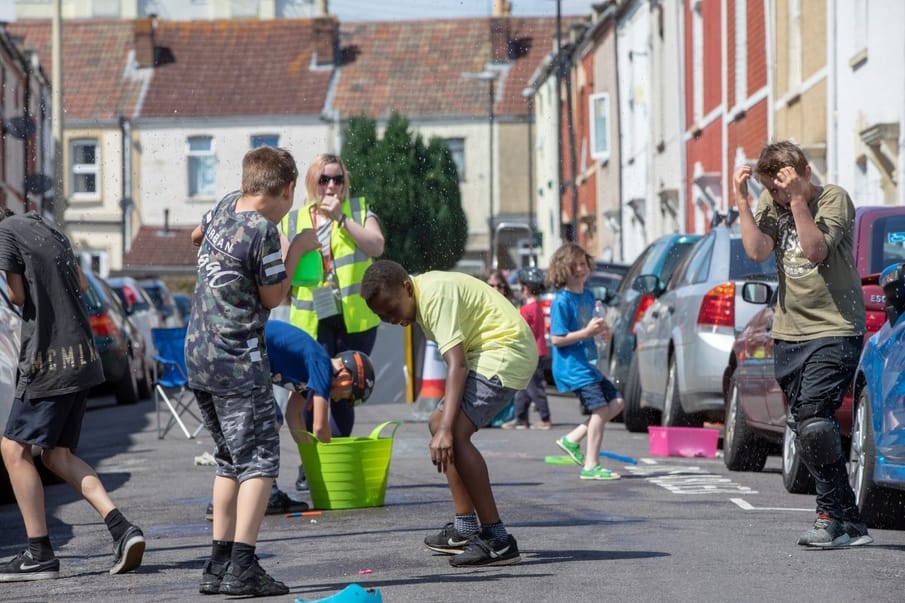
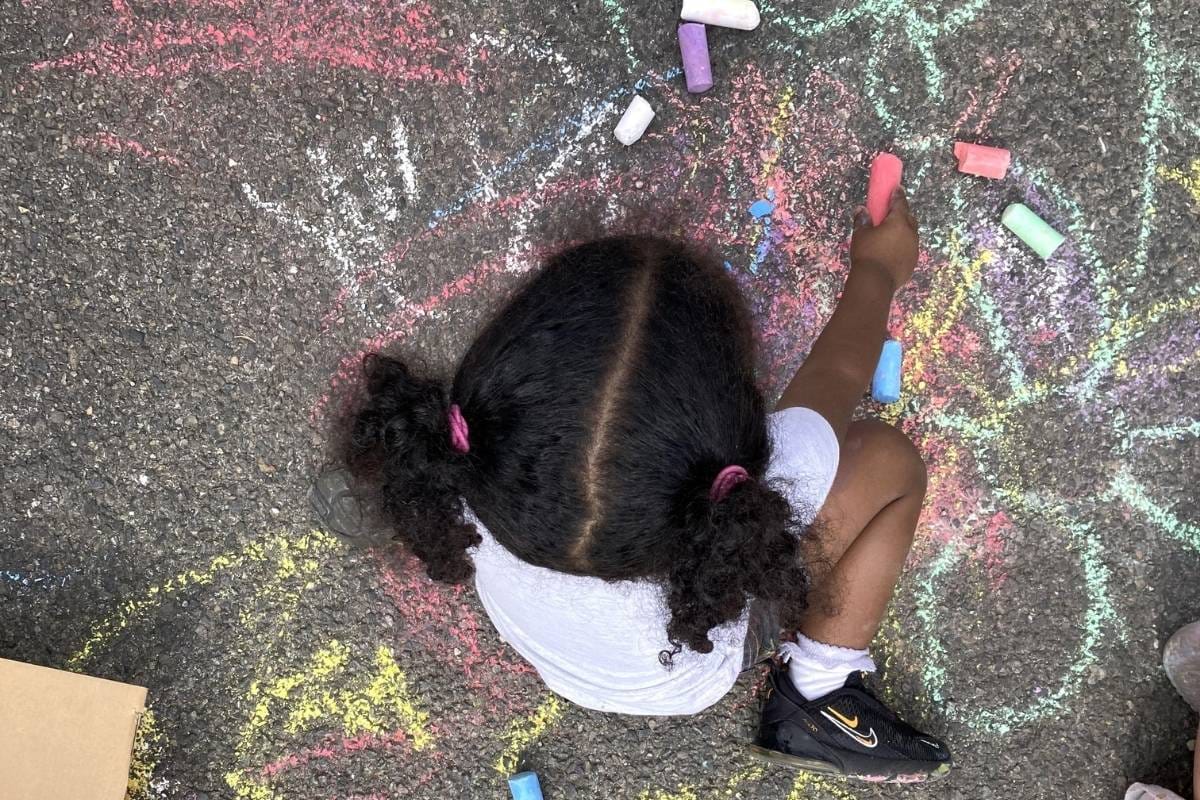
There’s a sense of nostalgia in the air, as a group of children kick a football around, while others sketch with chalk on the pavement. Adults overseeing the merriment clutch mugs of tea and chat together in the fresh air. They’re gathered on a street that has been temporarily closed to traffic, allowing imagination to take the driving seat, as children play games and form new friendships. This is a ‘play street’, where communities safely enjoy the outdoors in front of their homes.
In what can feel like a rarity in our modern, digital landscape, Playing Out is a parent and resident-led movement restoring children’s freedom to play outside, in the streets and spaces where they live, for their health, happiness, and sense of belonging.
“It began when a group of us, who were parents with children at the same primary school, were having discussions about how, when we were little, we had these childhoods with quite a lot of freedom in them,” says Ingrid Skeels, one of the parents who co-founded the organisation back in 2011.
“We all had really strong memories of that freedom of being able to play outside every day after school, on weekends, and during holidays, and this was a natural, normal part of our everyday lives. We realised this just doesn’t happen anymore.”
A few parents had the idea of closing the road, as if for a street party, so that children could get outdoors again. “The first session was amazing,” says Ingrid. “Neighbours came out who hadn’t met before, all different ages and backgrounds. Children who we didn’t even know lived there came out to play [...] They had bikes out, balls, chalk, skipping, imaginative play with little toys, just using that space on the doorstep.”
Since then, the concept has gathered momentum and others have set up play streets in their own communities. One of those who was inspired was Rachel, who started running play streets in her neighbourhood in Worcester. She wanted her children to have the freedom to play outside, but was also aware of the difficulties, like safety concerns about regular delivery vans parking on her road. She spoke to two local organisations – Play Worcester and the Residents’ Association – for help with getting the ball rolling.
Rachel put a poster in her front window with a QR code for people to scan to find out more about the project and, because it was Halloween time, she also handed out information to trick-or-treaters, asking them what they thought and whether they wanted to be involved. Since running the first event in February 2025, they became a regular occurrence, held roughly every six weeks.
“We’ve had people who have come quite a long way to join in, because it’s the only street that does it, and the kids love it,” Rachel says. “They don’t all go to the same schools, but there’s a familiarity now between them, and they’ve played cooperative games together. They say ‘hi’ to each other in the park now off the back of it.”
As you might expect, Ingrid says there have been challenges with councils agreeing to street closures, but this is getting easier, especially if you can get a team together to fill out paperwork. This involves applying to the council for a temporary street closure, so that the road is closed during the event. There is sometimes a small fee for applying, and it needs to be done each time, often weeks in advance – so it’s worth being aware that some pre-planning is involved.
It’s also essential to have adults who can steward on the day to make sure traffic doesn’t come down the road, as well as setting up signs to help direct cars. Some councils will lend you signs and cones, while others require you to provide them.
But the logistical tasks involved are worth persevering with, especially when there are so many positives to playing in the streets. “The impact for children that comes from that freedom to play close to home is really massive,” Ingrid explains. “They’re three to five times more active than if there was no playing out session. Also, they’re learning new physical skills – like kicking a ball around, or riding a bike – along with social skills, like learning how to mix with other children, and feeling part of the community.”
It’s this vital community connection that so many of us have been missing – not just for children, either. The Closing the Distance Between Us report, commissioned by The Big Lunch, revealed that more than half of the UK feel distant from their neighbours, with 40% not knowing each others’ names, and while many wanted to forge community connections, they felt there were barriers to doing so. “For the adults, it’s been incredibly important, as it’s a way for neighbours to meet each other [...] It breaks down those barriers on the street,” says Ingrid.
As for the future of play, Playing Out has recently announced a shift in focus that aims to create lasting change. As of March 2026, the Community Interest Company will close in order to allow the small team to redirect energy towards the systemic changes required to make play a top priority for children. Committed to influencing government policy, it’s already made an impact by contributing to the Play Commission for England, and co-authoring a parliamentary enquiry which sets out evidence and recommendations to improve children’s health and wellbeing through the built environment. It also plans to create an open-access resource to inspire individuals, communities, organisations, and policymakers, because ultimately, we can all reap the rewards of a community that centres play – no matter how old we are.
Photography | Playing Out
Comments