
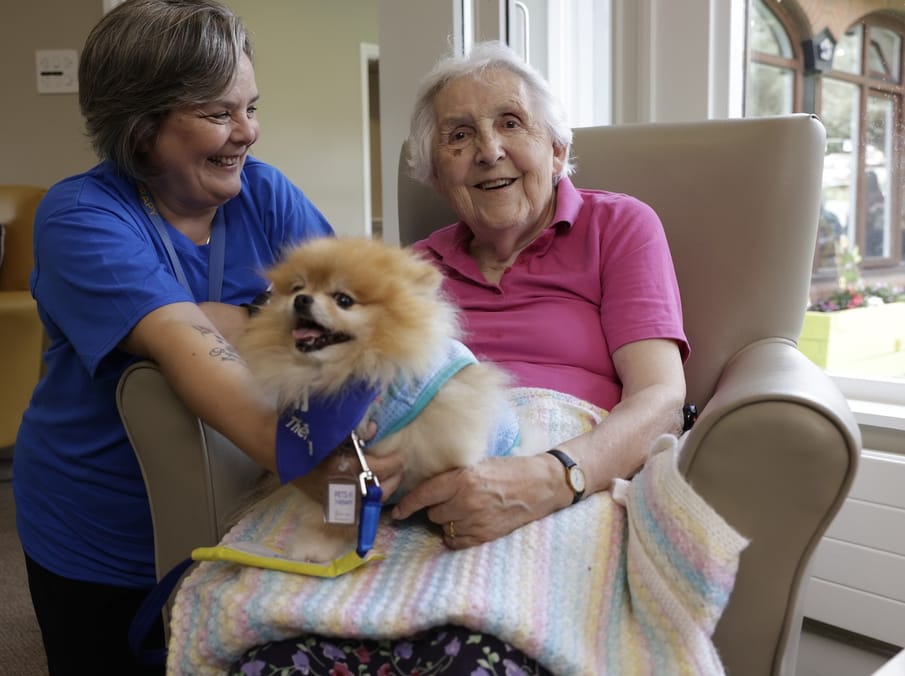
Meet the organisation connecting millions of people in community spaces, schools, and hospitals with the comforting companionship of animals – setting tails wagging and brightening lives along the way
“Ruby would work all day if she could,” says Jenny, talking about her eight-year-old pet cairnoodle dog, whose presence brings joy to people in hospitals, care homes, schools, and community spaces. “She absolutely loves it, and has a knack for finding the people who need her most.”
The enthusiastic pooch has been ‘volunteering’ with Pets as Therapy (PAT) since 2018 – a non-profit organisation that facilitated 160,000+ visits last year, connecting more than 1.6 million people with the soothing benefits of animal companionship.
Founded in 1983 by Lesley Scott-Ordish, a dog owner and passionate volunteer who understood the bond between humans and animals, the charity now boasts nearly 6,000 volunteer cat and dog owners, who take their pets out on the road to brighten the days of people in need.
It seems that instinctively, humans have always known that animals have healing abilities. Long before modern therapy became talked about openly, people understood that spending time with animals could ease emotional pain, and bring comfort during difficult times, with the first recorded use of animals as formal mental health treatment dated around the 1700s.
Fast forward to today, and animal-assisted therapy has become a recognised and valued part of treatment for all sorts of people, including those with autism or facing mental health challenges, from post-traumatic stress disorder (PTSD) and schizophrenia to Alzheimer’s disease. But with therapy options often hard to access due to limited resources and financial barriers, PAT is filling the gap by sending its fully-vetted animals, and owners, out into the community to meet people when they need them most.
Spending time with a furry friend is particularly helpful to patients who are in long-term care. “We know that spending time in the company of a friendly dog can bring about a host of psychological benefits, especially for anyone who has spent a long time away from home, and is missing a family pet,” says CEO Steven Wibberley. “Visits also reduce stress and anxiety, and can aid a person’s recovery and rehabilitation.”
But it’s more than just a momentarily respite from ill-health. One 2024 study, published in JMIRx Med, collated research on the impact of animal assisted therapy on patient wellbeing, and found that those with psychiatric disorders saw improved social functioning and quality of life, while specifically highlighting positive outcomes for patients with neurological conditions and PTSD. The research also found that animals had the power to reduce the anxiety of children in hospital, as well as improve both mood and emotions for not just patients, but staff as well.
PAT makes the most of this impact on younger people with their ‘Read2Dogs’ programme, which introduces animals to classrooms to support better learning. “We see, time and again, how reading with a friendly, non-judgemental pet can boost a child’s literacy, self-esteem, concentration, and even support behavioural development,” says Steven. “The presence of a calm, attentive animal creates a safe space for young people to grow.”
It’s the wellbeing benefits that spurred Ruby’s owner Jenny to sign up as a volunteer with PAT.
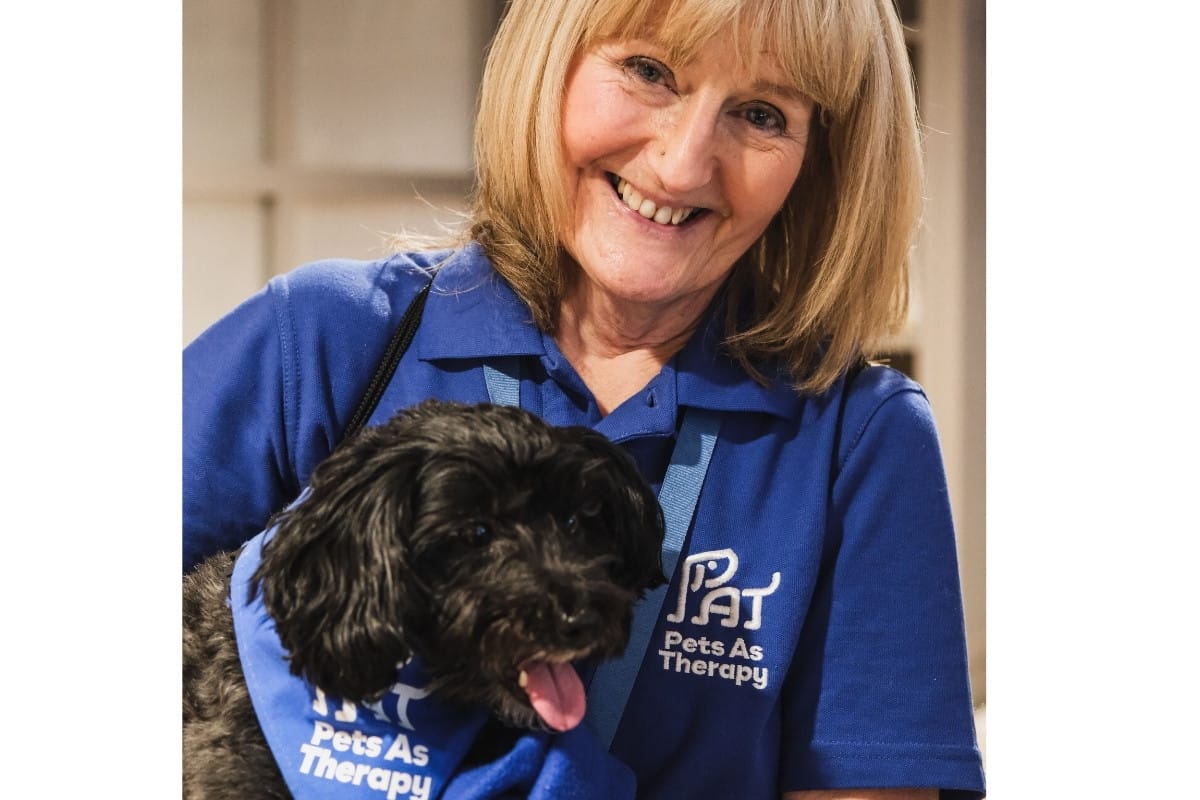
“After a lifetime of hidden mental health issues, and my recovery journey over the last 10 years, Ruby and I are huge advocates for openness around autism and mental health,” says Jenny. “I hid my difficulties from the world for 50 years, and now, Ruby and I want to challenge the negativity surrounding mental health. PAT has had such a positive impact on my life after losing a career that meant so much to me.”
Like many of the pets that go out and about in the community, Ruby’s visits often create moments of magic. In a local school, she encouraged a young boy, who was shy, to read aloud in class. In a care home, Ruby and Jenny formed a deep bond with a resident who rarely left his room, bringing him companionship and conversation for more than two years.
“Ruby has given me purpose, focus, and something meaningful to do. In my former careers as a police officer and teacher, I felt I was making a difference. Volunteering with Ruby gives me that same feeling,” says Jenny.
With requests for visits across the country, Pets as Therapy admits that it is currently struggling to meet demand, and requires more volunteers. “At the moment, requests for our visits outstrip the supply of volunteers by around 2:1. We simply don’t have enough volunteers to visit all of the hospitals, schools, and care homes that want dogs and cats to visit them,” says Steven. “That’s why we’re calling on more volunteers to step forward – so we can meet growing demand, and ensure more people benefit from these transformative visits.”
If you’re interested in taking part, you can apply online. You’ll need to share some details about you and your pet, including up-to-date vaccination certificates and two references. You’ll then meet a PAT assessor who will chat to you and check your pet’s suitability, to ensure the safety of everyone involved, including your pet.
Jenny’s story shows how volunteering with the PAT team benefits not just the people and communities visited, but also the volunteers and their dogs as well. She encourages anyone considering it to take the step: “Our visits do me good, too. It’s given me back a sense of purpose, and Ruby has an incredible ability to bring comfort to others. If you’re wondering if you and your dog could do it, I’d say give it a try – it could change lives.”
Photography | Christopher James Hall/Pets As Therapy
Comments