
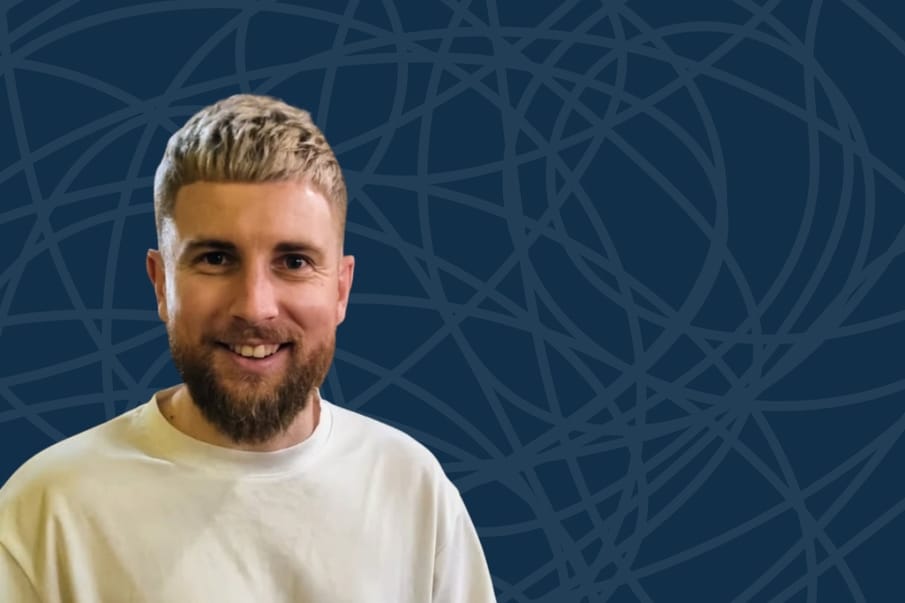
Welcome to Anxiety on Your Mind, the series where we explore the reality of living with anxiety. In this edition, Luke Clark, 36, from Milton Keynes, shares his story…
Luke Clark as told to Fiona Fletcher Reid
Anxiety tends to impact me most when I’m juggling too many plates at once – work deadlines, parenting, recording my podcast, and the pressure I place on myself to keep it all together. It’s often the anticipation that spikes it more than the actual event, so, this week I’m being proactive and focusing on giving myself permission to slow down, by taking some annual leave away from my day job in order to rest.
Using up my holiday allowance specifically to take care of myself feels strange initially, but I’m trying to lean into it. I start the morning with a slow breakfast with my one-year-old daughter, taking my time with cooking, eating, and chatting with her instead of rushing. Later, I go for a jog around the local lake to make the most of my time off, although I often prefer running in the morning, because it sets the tone for the rest of my day. Somehow, the days where I’ve worked off all that anxious energy early just seem to flow more easily.
It seems such a striking contrast to where I was just a few years ago. Back then, drinking was my way of coping with anxiety, after having experienced a trauma incident. The turning point came around Christmas 2020, after a night out where I drank far too much and blacked out. I realised then that I couldn’t carry on down the path I was on.
The idea of getting sober was anxiety-inducing in itself – especially as drinking feels so deeply ingrained in every social situation – but I also knew I couldn’t keep numbing my emotions. Sobriety has given me clarity, and forced me to feel things honestly, which has been really hard, but, ultimately, has led me to feel less anxious and more balanced in every area of my life. It also nudged me into therapy, which has taught me so many of the tools I use today to manage my moods.
Social anxiety is really common when you’re sober. So many events and occasions, even just hanging out with a mate, come with the expectation of having a few pints. So I’ve had to learn a lot of tricks and techniques to manage the anxiety around it. I’ll often take the lead and suggest activities that get us out of the pub – like bouldering or live music – or I’ll use breathing techniques to help me stay grounded in the moment. I still experience anxiety, but I recover quicker, and with far more compassion for myself. I don’t pile on shame the way I used to, which is a huge positive shift for me.
My toolkit is quite varied, and includes running, journaling, switching my phone off, and spending time in water. Some days I just can’t seem to settle, like on Wednesday, so I take myself to the cinema. It’s one of the few places where my mind fully switches off, because my phone is hidden away, the lights are low, and everything is still.
Even with all the tools I have now, some days are just hard. The tight chest kicks in, the restless energy takes over, and suddenly I’m racing through work, and life, without stopping to breathe. Channelling that energy into open-water swimming is amazing for me, because I find it instantly grounds me, and brings me back into my body.
But jumping into a freezing cold lake isn’t for everyone. That’s the thing about recovery – it has to be personalised. You don’t need to overhaul your routine or meditate for an hour a day if that’s not realistic for you. Start small. One tiny act of self-care – drinking more water, taking your medication, reaching out to someone you trust – really does make a difference. Over time, those small steps add up. They build your confidence, regulate your nervous system, and change how you see yourself.
If there’s one thing I’ve learned, it’s the importance of being proactive. Don’t wait until you’re overwhelmed to slow down, and don’t bottle things up, because saying things out loud takes some of the power away. Also, I want people to know that they don’t need to be ‘bad enough’ to deserve support – being human is enough.
Slowing down has been the greatest gift sobriety has given me. What started as survival has become a way of living. Instead of rushing through breakfast with my family, I’m fully present. And that intentional shift hasn’t just improved my own wellbeing – it’s had a ripple effect on the people I love, too.
Comments