
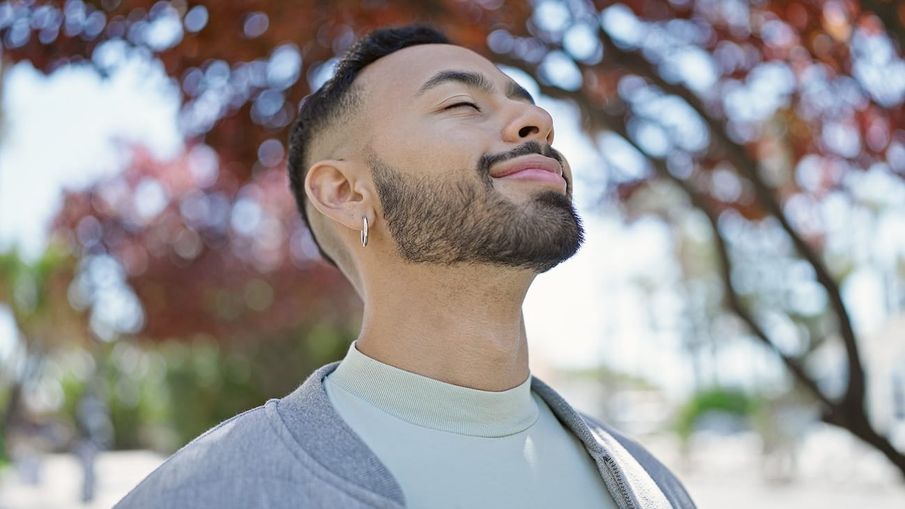
How to hone your appreciation habit, so it feels less like an obligation, and more like a natural part of your day
What could be more straightforward than writing down a list of things we’re grateful for each day? We know we should feel grateful for the warm bed we woke up in, or the sound of chirping birds on the windowsill, but, sometimes, there’s a disconnect between what we can rationalise as ‘good’ and what we truly feel.
Through decades of research, gratitude has been consistently shown as a robust predictor of wellbeing, such as in a paper published in the Journal of Research in Personality.
“But for many people, especially those navigating anxiety, stress, or low mood, gratitude can feel flat, forced, or even like toxic positivity,” says Jane Msumba, founder of the Inner Glow Clinic.
“Our brains are wired for survival, not happiness. We all have a negativity bias: a tendency to notice threats more than positives. In anxiety, the brain zooms in on danger cues; in depression, reward circuits can feel muted. This means that trying to list positives may feel more like pressure than relief.”
And with the cultural rise of gratitude practices, this pressure can feel heightened. As Jane explains: “One of the biggest barriers to gratitude is the sense of obligation.”
It might, then, become more about reframing the practice, as opposed to negating it altogether. Your version might not be a handwritten list every morning in your cloth-bound journal as you watch the sunrise. “You might need a softer, more imaginative way in,” suggests Jane.
Start small
Chartered counselling psychologist Dr Kirstie Fleetwood Meade recommends starting small and simple: “If journaling five things that you are grateful for feels like too much, instead, try to notice one thing that didn’t go wrong.”
Jane echoes this in her suggestion to acknowledge and reframe negatives, instead of forcing yourself to find positives. “For example, you might say ‘Even though today was heavy, I could notice one lighter moment.’”
Make it a habit
“Just like exercise, the impact comes with repetition, not a one-off effort,” says Dr Fleetwood Meade. Whether you schedule your gratitude practice at a time of day when you know you have a few minutes to spare, or do it first thing when you have more energy, Jane suggests connecting it to a pre-existing habit (such as brushing your teeth or while boiling the kettle) to make it stick.
Share it
If formalising gratitude into a practice feels forced, “pairing it with a social connection might feel more authentic”, says Dr Fleetwood Meade. This might be through a text message, voice note, or just a good old-fashioned conversation.
“Research shows how socially-shared gratitude strengthens bonds, and amplifies the effect,” says Jane. Arguably, this makes for a more potent form of gratitude. What’s more, this allows for a two-way exchange where we can not only express, but, also, receive gratitude – releasing dopamine and serotonin in the brain, making us feel good.
Functional imagery training (FIT)
FIT is based on research that mental imagery is more strongly emotionally charged than other types of thought. Jane, who is a proponent of the approach, says: “Unlike traditional journaling, FIT uses multi-sensory mental imagery to make gratitude more vivid and emotionally engaging.
“Instead of simply writing ‘I’m grateful for my morning coffee,’ close your eyes and replay the experience. See the steam, smell the aroma, feel the warmth of the cup. When the brain relives the experiences with sensory details, it codes them as more real.”
Glimmer spotting
Dr Fleetwood Meade describes glimmers as “micro moments of safety, beauty, or joy that your body notices before your mind”. They relate strongly to the idea of awe, which 2022 research, published in Perspectives on Psychological Science, calls a “pathway to physical and mental wellbeing”. If we practise noticing glimmers, and build this into our day, we can counter our natural tendency to focus on the negative.
Dr Fleetwood Meade urges you to “pause to register how your body responds to a glimmer, and notice this feeling, even if fleeting. This is gratitude at its most embodied.”
“When gratitude resonates, it’s not just a fleeting nice feeling; it shows up in brain scans,” explains Jane. It can therefore have a huge impact on the people that need it most – those that might be most resistant to the practice. The secret is finding a way that feels both authentic and manageable.
Dr Fleetwood Meade notes: “Gratitude doesn’t erase suffering, but, instead, can sit alongside it. Two things can be true: we can be struggling, and we can acknowledge what we are grateful for at the same time.”
Comments